At first glance, monstera and philodendron look like the same plant: big green leaves, a vining habit, and that unmistakable jungle vibe. They even sit next to each other in plant shops with labels that seem interchangeable.
They are not the same plant. One will quietly fill a shelf; the other will take over a corner of your living room. Here’s how to tell them apart and which one actually fits your home.
At a glance
| Monstera (deliciosa) | Philodendron | |
|---|---|---|
| Leaf shape | Large, split, with holes (fenestrations) | Solid, heart-shaped, no holes |
| Mature leaf size | 30-90 cm (1-3 ft) wide | 8-20 cm (3-8 in) long |
| Growth habit | Climbing, wide-spreading | Climbing or trailing, compact |
| Light | Bright, indirect preferred | Tolerates lower light |
| Watering | Top 3-5 cm of soil dry | Top 3-5 cm of soil dry |
| Space needed | High — needs a room to grow | Low — fits shelves and small corners |
| Beginner friendly | Yes, with a little room | Yes, very forgiving |
Are they the same plant?
No, but the confusion is fair. Both are aroids (family Araceae), which means they share the same anatomy: aerial roots, a climbing habit, and flowers shaped like a spathe and spadix. In the wild, both grow up tree trunks in tropical forests.
The genera split long ago. Monstera is its own genus, best known through Monstera deliciosa — the “Swiss cheese plant.” Philodendron is a much larger genus with hundreds of species, from the trailing heartleaf (Philodendron hederaceum) to the upright varieties sold under names like “Brasil” or “Prince of Orange.”
One more layer of confusion: the plant sold as a split-leaf philodendron is often actually a monstera — or its close relative Thaumatophyllum bipinnatifidum, which was reclassified out of the philodendron genus. If you bought a “split-leaf philodendron,” you likely own a monstera.
Leaf shape: the quickest way to tell them apart
This is the test that settles it in seconds.
Monstera leaves are large, thick, and develop two signature features as they mature: deep splits along the edges and oval holes (fenestrations) inside the leaf. Young monstera leaves may have neither — so a small monstera looks surprisingly like a philodendron.
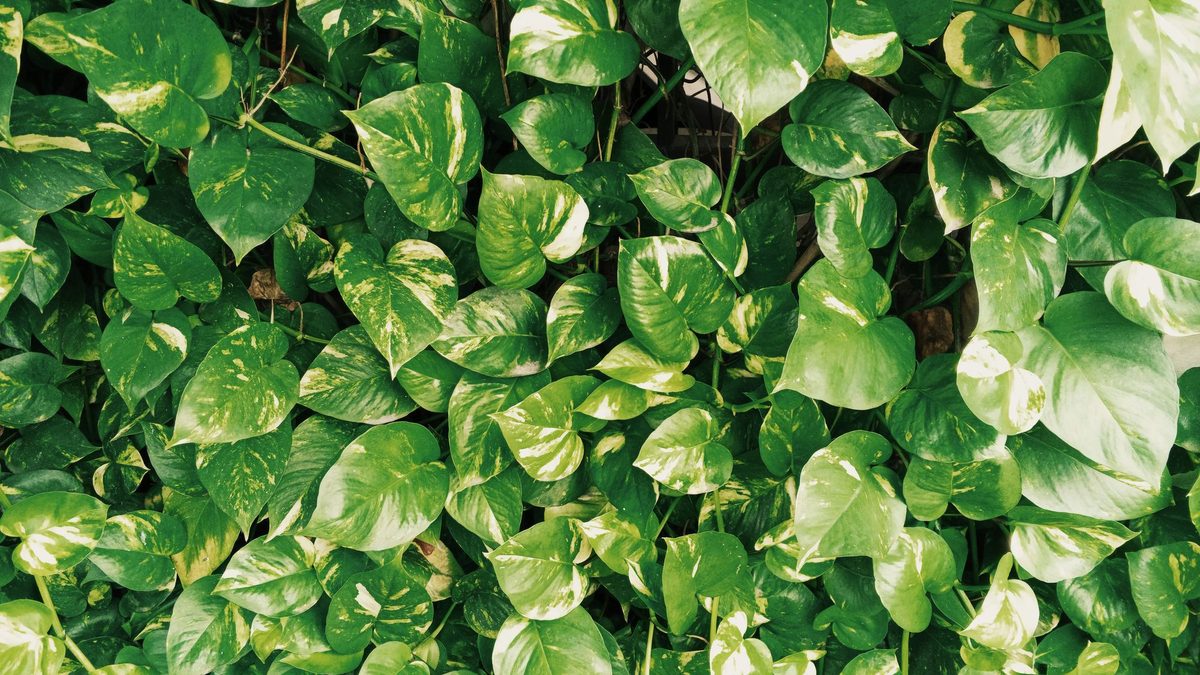
Philodendron leaves stay solid and heart-shaped with smooth edges. No splits, no holes, ever. The heartleaf philodendron’s leaves are also noticeably thinner and often slightly glossy, with a soft texture compared to a monstera’s leathery feel.
If the leaf has holes, it’s a monstera (or a close relative). If the leaf is a smooth heart, it’s a philodendron.
Size and growth habit
Monstera is a statement plant. Given light and space, it produces leaves up to 90 cm across, and the whole plant can reach 2-3 meters. It climbs with thick aerial roots and genuinely needs a moss pole or trellis to grow well indoors. In a small apartment, a mature monstera becomes furniture.
Philodendron is the space-efficient option. The heartleaf trails beautifully from a shelf or climbs a small pole. Even larger varieties stay modest next to a monstera. If your home is small or you want shelf greenery, philodendron fits without taking over.
Care comparison
The care basics are the same: bright indirect light, water when the top few centimeters dry out, and a pot with drainage. The differences are in the details.
Light
Both prefer bright, indirect light and both survive medium light. The difference is tolerance: philodendron accepts lower light without complaint and grows there slowly. Monstera in low light stops producing new leaves and, more importantly, stops producing splits — it reverts to solid, hole-free leaves. If you want fenestrations, give your monstera the brightest indirect spot you have.
Watering
Identical rule for both: water thoroughly when the top 3-5 cm of soil feels dry, then let excess water drain. Overwatering is the number one killer of both plants. Philodendron’s smaller root system dries out a little faster, so check it slightly more often in summer.
Soil and repotting
Both like airy, chunky potting mix. Add perlite or orchid bark to standard houseplant soil for better drainage. Repot when roots circle the pot or push out of the drainage holes — typically every 1-2 years for both, and always in spring.
Humidity
Both are tropical plants that appreciate humidity, but neither demands it. Normal indoor air is fine; leaves may develop slightly crispy edges in very dry, heated rooms. A pebble tray or a nearby humidifier helps in winter, but don’t obsess over it.
Support and pruning
Monstera needs a moss pole or trellis to climb — without support it sprawls and can topple over. Philodendron climbs if you give it a pole but is equally happy trailing down. Prune both in spring by cutting just above a node; the cuttings root easily in water.
Which one should you choose?
- Choose the monstera if you have space to fill, want a bold tropical centerpiece, and love watching a plant mature into something dramatic with split leaves.
- Choose the philodendron if you want low-fuss greenery, live in a small space, or want a plant that looks great trailing from a shelf or cabinet.
- Choose either for a first houseplant — both are forgiving. Start with the low-maintenance houseplants guide if you’re new, and keep both on schedule with the free printable plant care checklist.
Whichever you bring home, the rules are the same: bright indirect light, well-draining soil, and water only when the top of the soil is dry. Get those right and either plant rewards you with steady growth — in the monstera’s case, leaves that only get more impressive with age.
If yellow leaves appear later, the causes and fixes are the same for both — see why monstera leaves turn yellow for a diagnosis that applies to philodendrons too.