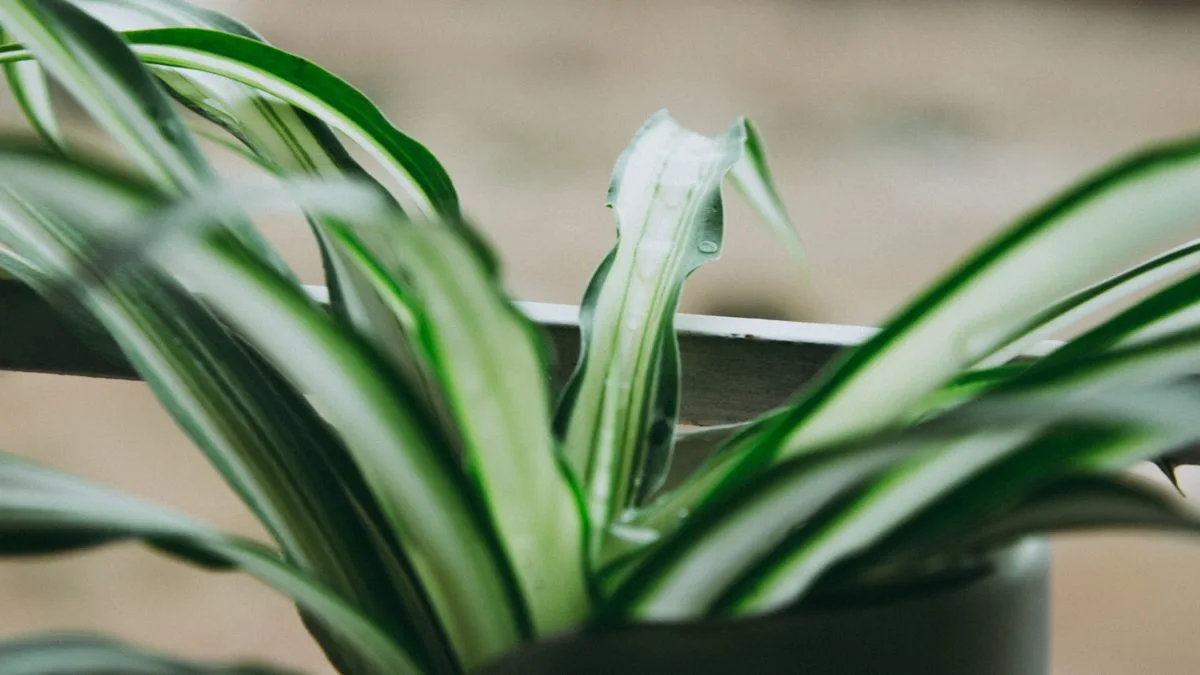
Spider plants (Chlorophytum comosum) are the most forgiving houseplant you can own — they survive low light, dry air, and the occasional missed week. But there is one thing they truly hate: sitting in wet soil.
Get the watering right and everything else becomes easy. Here’s the exact schedule and the signs to watch.
The short answer
Water your spider plant when the top inch of soil feels dry — usually every 7-10 days in summer, every 10-14 days in winter. In an average home, that works out to roughly once a week.
This isn’t a calendar rule, though. Your home’s temperature, pot size, and light levels change the timing. Learn to check the soil and you’ll never guess again.
How to check if it’s time
- Stick your finger in — push it about 2-3 cm (an inch) into the soil. Dry at that depth = time to water.
- Lift the pot — a dry plant is noticeably lighter. After two weeks you’ll feel the difference immediately.
- Look at the soil color — dry topsoil turns lighter and pulls away from the pot edges slightly.
Seasonal watering schedule
| Season | Frequency | Notes |
|---|---|---|
| Spring | Every 7-10 days | Growth picks up — water as soon as top inch dries |
| Summer | Every 5-8 days | Warmer + brighter = faster drying |
| Autumn | Every 8-12 days | Growth slows as light drops |
| Winter | Every 10-14 days | Let soil dry out more between waterings |
These are starting points, not laws. The finger test always wins.
Signs you’re overwatering
- Yellow, mushy leaves — the most common sign. Yellowing leaves usually mean too much water, not too little.
- Brown, soft roots — gently lift the plant and check: healthy roots are white and firm; rotten ones are brown and squishy.
- Fungus gnats — tiny flies hovering around the soil are a classic overwatering symptom.
If you spot these, let the soil dry completely before the next watering, and consider repotting into fresh soil if the roots are damaged.
Signs you’re underwatering
- Drooping, folded leaves — the plant looks “tired” and the leaf edges curl inward.
- Brown leaf tips — though this is often low humidity rather than thirst.
- Pale, washed-out color — a chronically dry plant loses its green intensity.
The good news: spider plants bounce back fast. A deep soak brings them back within a day or two.
Best practices
- Water thoroughly, not often — pour until water runs out the drainage hole, then empty the saucer. Never let it sit in standing water.
- Use room-temperature water — cold tap water can shock the roots.
- Skip the schedule, keep the habit — check every Saturday morning. Consistency beats precision.
- Adjust after repotting — fresh soil holds more water, so stretch the interval for the first month.
The one rule to remember
When in doubt, wait another day. Spider plants handle dryness far better than wet feet. A plant that’s a little thirsty today is fine; a plant that’s been drowning for a week is not.
If you’re building a full houseplant routine, our beginner houseplant guide covers the 10 easiest plants to start with, and the weekly plant care checklist turns all of this into a printable routine.