The curtains-versus-blinds decision is really a question about how you use the room, not about which product is objectively better. Curtains bring softness, color, and near-total darkness when lined, while blinds give you instant, precise control over light and wipe clean in seconds. Most homes end up with both, and the smart move is matching each window to what that room needs.
This comparison walks through light, privacy, energy, upkeep, cost, and style so you can pick per window instead of per house.
At a Glance
| Curtains | Blinds | |
|---|---|---|
| Light control | Soft filter or full blackout with liner | Precise angles, but light leaks through slats |
| Privacy | Total when closed | Good when closed, gaps between slats when tilted |
| Insulation | Lined fabrics add a layer of still air | Minimal, though closed slats block solar heat gain |
| Cleaning | Vacuum, spot clean, occasional wash | Dust slats, wipe spills, rarely more |
| Cost range | Ready-made to made-to-measure plus rod and hardware | Budget vinyl to wood or motorized |
| Style | Softness, pattern, and height illusions | Clean lines, minimal footprint, tailored look |
| Best for | Bedrooms, living rooms, large windows | Kitchens, baths, offices, small windows |
Light control and glare
Blinds are the precise instrument. A quarter turn of the wand takes a room from bright to dim, and you can aim light at the ceiling to kill glare on a screen while keeping the room usable. That control is why blinds dominate offices and media rooms.
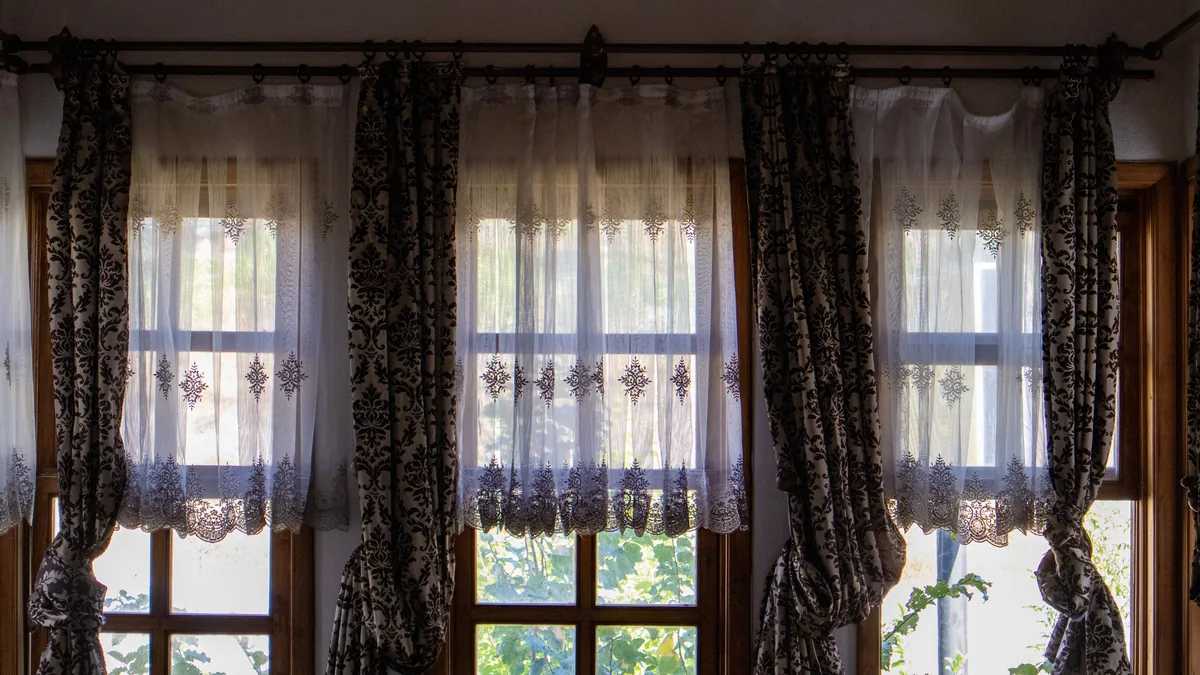
Curtains are the mood setter. A sheer panel turns harsh sun into an even glow, a midweight cotton cuts glare, and a blackout liner removes light almost completely. Most curtains work in only two states, open or closed, so pick the fabric for the light problem that bothers you most.
One behavioral detail matters more than the hardware: most people rarely adjust their window coverings once installed. A U.S. Department of Energy survey of residential window coverings found that roughly 75 percent are not adjusted on a daily basis. If you will not touch it after hanging, choose the setting that works best at midday, because that is where it will stay.
Privacy, day and night
Curtains give total privacy the moment they close. A lined pair turns a floor-to-ceiling window into a solid wall at night, which matters in ground-floor rooms and city apartments where neighbors are a few feet away.
Blinds are more complicated. Closed slats stop people from seeing in, but small gaps remain between them, and at night with interior lights on, movement shows through the openings. Tilting blinds to let light in during the day also lets people see in, so rooms facing a busy street often end up shut all day and dark.
If privacy is the priority and you like blinds, the honest fix is a sheer curtain in front of the blind, so daylight comes through while the view from outside stays blocked.
Energy and insulation
Window coverings are real energy tools, but curtains and blinds are not the strongest ones you can buy. U.S. Department of Energy research notes that vinyl and metal blinds account for about 60 percent of window coverings in American homes and that, while blinds block some solar radiation, they do not provide much insulation. The same research found honeycomb cellular shades outperformed every other shading device.
That does not make curtains useless. A heavy lined curtain traps a layer of still air against the glass, which is genuine insulation on cold nights, and closed blinds bounce solar heat before it enters the room on hot afternoons. Treat both as comfort tools first, and layer them over a cellular shade if insulation is the whole point.
Cleaning and upkeep
Blinds are the low-effort winner. A weekly pass with a microfiber duster keeps slats presentable, and an occasional wipe with a damp cloth handles kitchen grease or bathroom splashes. Vinyl and aluminum shrug off the moisture that stains fabric.
Curtains demand more. They collect dust, trap cooking odors, and hold onto stains near windows that get opened often. Vacuum them with an upholstery brush every few weeks, and wash only fabrics that allow it, since many decorative and lined panels need professional cleaning.
Cost, from budget to custom
Both categories span a wide price range, so compare like with like. Entry-level blinds are inexpensive and sold in standard widths you cut to size. Curtains also start affordable with ready-made panels, but you pay extra for the rod, rings, and finials, and tall or wide windows push you toward made-to-measure panels that cost more than a custom blind.
The value question is lifespan. A quality blind can last a decade or more with basic care, while curtains fade and go out of style faster, though they are also easier to swap for a new look.
Style: softness versus structure
Curtains are the fastest way to make a room feel finished. Floor-to-ceiling panels soften hard edges, add pattern and color at eye level, and hide an ugly frame. Hanging the rod closer to the ceiling than to the window top draws the eye up and makes the wall look taller.
Blinds read as clean and architectural. They disappear into the window, suit minimalist and modern rooms, and leave sills free for objects, which matters when you use the sill as display space. They also handle windows of odd shape and size more gracefully than curtains.
Think of the window treatment as the vertical version of the floor layer: the room settles once both are right. The same logic that governs the floor applies, and the rug size guide explains why the grounding layer matters more than people expect.
Which rooms suit curtains, which suit blinds
Go curtains-first in bedrooms, where a blackout pair is the cheapest sleep upgrade available, and in living rooms where you want color and softness. Go blinds-first in kitchens and bathrooms where moisture rules, in home offices where glare control is daily work, and in nurseries or playrooms where cordless blinds remove the strangulation risk that corded window coverings carry for young children.
In compact rooms, the treatment should take up as little visual space as possible, and blinds or slim roller shades beat bulky curtains. If the room is tight on floor area, the small living room layout ideas guide covers how window walls shape where everything else goes.
Windows that hold plants deserve a second look before you buy. Curtains that filter harsh afternoon sun protect the leaves closest to the glass, and the houseplant styling guide maps which plants can handle the direct light a north or east window delivers.
The verdict
Choose curtains when you want softness, pattern, or full darkness, when the window is tall or wide enough to deserve a statement, and when the room is a bedroom or a formal living space.
Choose blinds when you need precise light control, easy cleaning, or moisture resistance, when the window is small or oddly shaped, and when the room is a kitchen, bathroom, or office.
Choose both when the window faces a street, gets harsh afternoon sun, or sits in a room you use from morning to night. Blinds handle the working hours, curtains take over when the lights go on. Most rooms with a serious window problem end up with the pair.