Houseplants are the fastest way to change how a room feels, but the difference between “styling” and “plant clutter” comes down to placement, pots, and grouping. A single large plant in the right spot does more for a room than ten scattered pots.
This guide covers the rules that make plant styling look intentional, then walks through every room in the house. No redesign required, just arrangement.
Start with plants that match your light
Every styling plan fails when the plant dies six weeks in. Before you think about placement, match the plant to the light your room actually gets, not the light you wish it had.
- Bright indirect light: monstera, rubber plant, fiddle leaf fig
- Medium light: peace lily, heartleaf philodendron, Chinese evergreen
- Low light: snake plant, ZZ plant, pothos
If you are new to this, the beginner houseplant guide covers ten plants that tolerate low light and missed waterings, which buys you time while you learn each plant’s needs.
The rule of three for groupings
One plant per corner looks like a plant store. Three plants arranged as a group look like a decision. When you group, follow three rules:
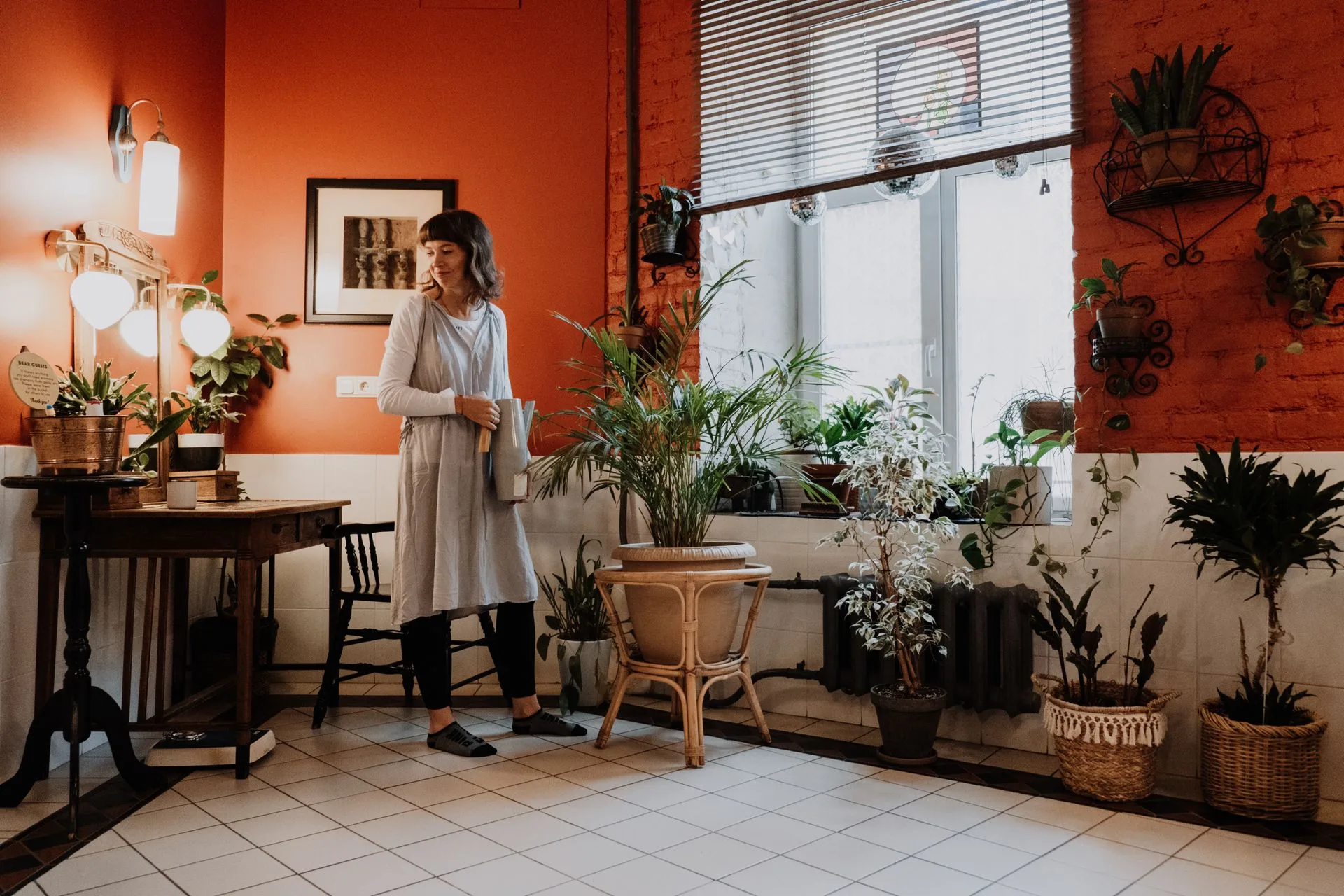
- Vary the heights. A tall floor plant, a medium plant on a stand, and a trailing plant on the shelf above form a triangle that the eye reads as one unit.
- Mix leaf textures. Pair a broad-leaf plant like a monstera with a fine-leaf plant like a fern or a trailing pothos. Same-texture groups look flat.
- Connect the pots. Matching pot colors or materials tie the group together even when the plants are different.
A well-composed group also creates a small humid microclimate, which most houseplants prefer over dry room air.
Play with height, not just floor space
Floor space is the most expensive real estate in any room, so use the air above it. Three levels cover most spaces:
- Floor: large statement plants in tall pots fill empty corners and soften the transition between wall and floor.
- Waist height: plant stands, side tables, and low shelves put plants at eye level where they are actually seen.
- Above eye level: trailing plants on high shelves and wall-mounted hangers draw the eye up and make ceilings feel higher.
If you are working with a small room, vertical placement matters even more. A tall snake plant in a corner takes no floor footprint, and the small living room layout ideas guide shows how to fit plants, seating, and storage into tight spaces without crowding the walkway.
Choose pots that match the room
The pot is 50 percent of the styling. A great plant in the wrong pot looks accidental; a plain plant in the right pot looks curated. Match the material to the room’s character:
- Warm, traditional rooms: terracotta and glazed ceramic in earthy tones
- Modern or minimalist rooms: matte black, white, or brushed metal
- Natural or boho rooms: woven baskets and rattan (use a waterproof liner inside)
- Bright or playful rooms: colored ceramic as a deliberate accent
Practical note: keep the plant in its nursery pot and slide it into the decorative pot. That way you water, drain, and swap plants without repotting every time. When a plant does outgrow its home, the repotting guide walks through the process without damaging the roots.
Room by room: where plants earn their place
- Living room: one large statement plant beside the sofa or TV console, plus a shelf group on the opposite side for balance. Keep the walkway clear; plants should frame the room, not block it.
- Bedroom: two or three small to medium plants on the nightstand, dresser, or windowsill. Skip anything that needs frequent watering near electronics.
- Bathroom: humidity-loving plants like ferns, peace lilies, and pothos thrive in the steam. A shelf above the toilet or a hanging planter by the shower works best.
- Kitchen: herbs on the windowsill are both decorative and useful. A small trailing plant on top of upper cabinets softens the hard lines of the cabinetry.
- Entryway: one medium plant on the console or floor beside the door gives guests an immediate first impression. Choose a durable, low-light tolerant option since entryways rarely get direct sun.
Styling mistakes to avoid
- Scattering singles. Evenly spaced single pots read as clutter. Group them or commit to one statement plant.
- Blocking the window. Plants in front of the window reduce the light every other plant in the room gets. Keep the brightest spot visually open.
- Ignoring the pot. Mixing five pot styles in one room looks busy. Limit yourself to two materials per room.
- Buying before measuring. A “small” floor plant can reach the ceiling. Check the mature size before you buy, and leave room for the plant to grow.
- Forgetting the back. For shelves against a wall, put the tallest plant at the back and trailing plants at the front edge so the display has depth.
Styling houseplants comes down to three decisions: the right plant for the light, the right pot for the room, and a deliberate arrangement instead of scattered singles. Start with one corner, apply these rules, and build out from there.