The most common rug mistake is not color or pattern, it is size. A rug that is too small floats in the middle of the room and makes the furniture look disconnected, while an oversized rug swallows the floor and crowds the walls. Get the size right first, and almost any style decision after that will work.
This guide covers the standard sizes you will actually find in stores, then goes room by room with the rules that keep a rug from looking like an accident.
Start with the sizes that actually exist
Rugs are sold in a handful of standard sizes, and knowing them before you measure saves you from falling in love with a pattern that will never fit. The common residential sizes are:
- 5 by 8 feet: small seating areas, beside the bed, entryways
- 6 by 9 feet: small living rooms, larger bedrooms
- 8 by 10 feet: the most common living room size, medium dining rooms
- 9 by 12 feet: large living rooms, open-plan spaces, under king beds
- Runners (2.5 by 7 feet or 2.5 by 10 feet): hallways, entryways, kitchen galley
Everything else, such as 7 by 9 or 10 by 14, usually has to be special-ordered, which costs more and limits your pattern options. When a room needs a nonstandard size, adjusting the furniture layout is often easier than ordering a custom rug. A size and dimension guide shows how each standard size relates to typical room dimensions.
Living room: the front-legs rule
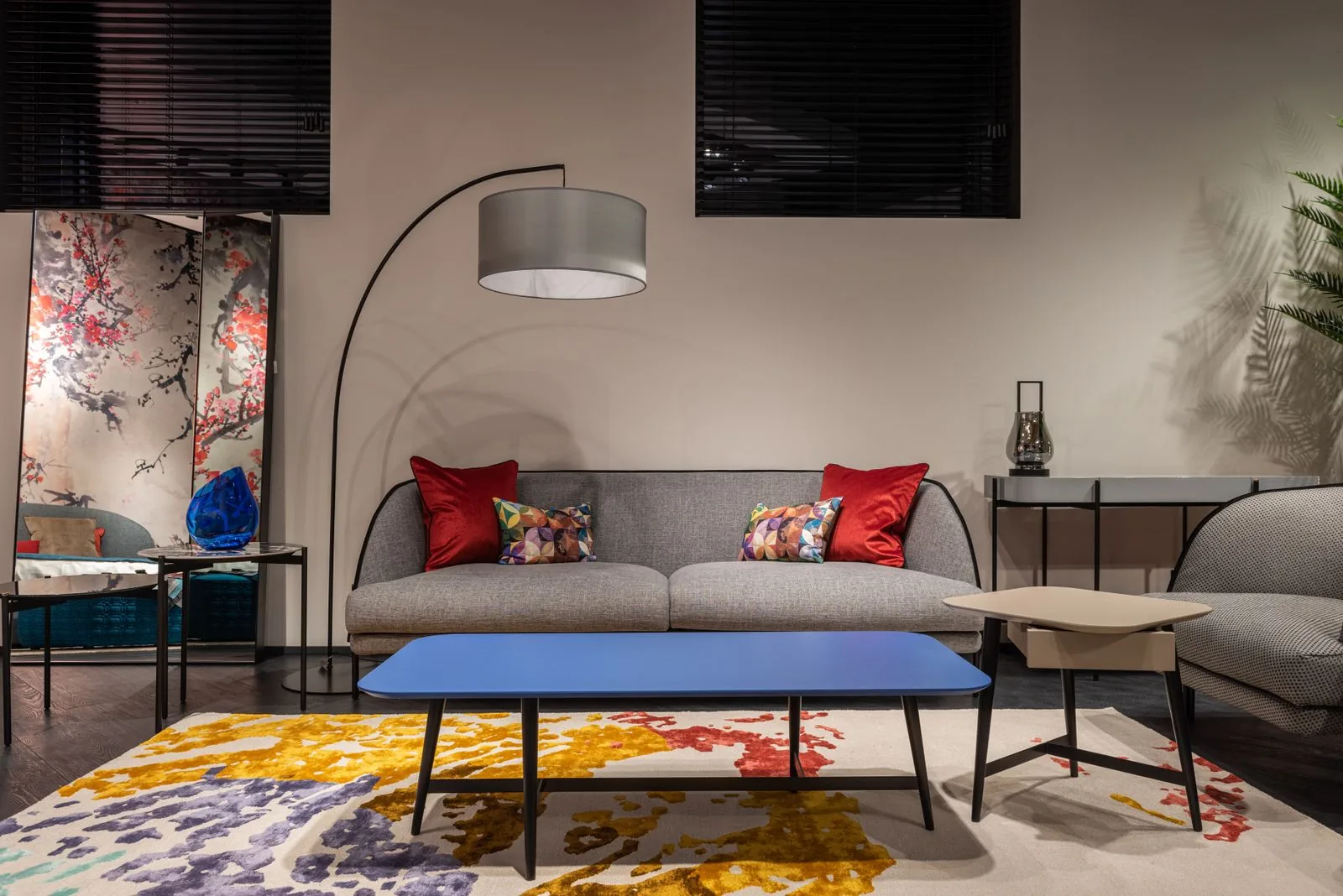
In a living room, the rug exists to anchor the seating group. The rule that produces a balanced look almost every time is simple: the front legs of the sofa and chairs rest on the rug, and the rug extends a little past the sides of the furniture.
- Small living room (sofa plus one chair): a 5 by 8 or 6 by 9 rug fits under the front legs of the sofa and leaves enough floor around the edges.
- Medium living room (sofa plus two chairs or a loveseat): an 8 by 10 rug is the standard choice and the size most retailers sell the most of.
- Large or open-plan room: a 9 by 12 rug defines the seating zone and separates it from the rest of the room. If the rug is too small, the seating area looks like a cluster of islands.
Putting all four legs of every piece on the rug only works in large rooms, and it shrinks the visible floor, so treat it as an exception rather than a goal. One more detail matters: leave a border of bare floor between the rug and the wall, roughly 12 to 18 inches, so the rug reads as intentional instead of wall-to-wall. If you are fitting a rug into a compact room, the small living room layout ideas guide shows how to position the seating group first, which makes the rug measurement much easier.
Dining room: the 24-inch rule
Dining is the room where size errors are most obvious, because chairs slide in and out constantly. The rule is that the rug must extend at least 24 inches beyond every edge of the table, which keeps the chairs on the rug even when someone pushes back to stand up. A rug that stops at the table legs will catch chair legs and tip them on the seam.
For a typical six-seat table, that means an 8 by 10 rug at minimum, and a 9 by 12 for larger tables. Before you order, measure the table, add 48 inches to both the length and the width, and compare that number with the rug size.
Bedroom: under the lower two-thirds of the bed
Bedroom rugs work on a different logic. You do not want the rug under the pillows or the nightstands, because the bed would visually crush it. Instead, the rug sits under the lower two-thirds of the bed and extends past the sides and the foot.
- Twin or full bed: a 5 by 8 rug at the foot and along one side, or runners on both sides.
- Queen bed: an 8 by 10 rug fits under the lower two-thirds and extends past both sides of the bed.
- King bed: a 9 by 12 rug is the minimum that clears both sides of the bed and the foot.
The goal is to step out of bed onto the rug. If you only place a rug at the foot of the bed, extend it at least 18 inches past the end.
Entryways and hallways: runners
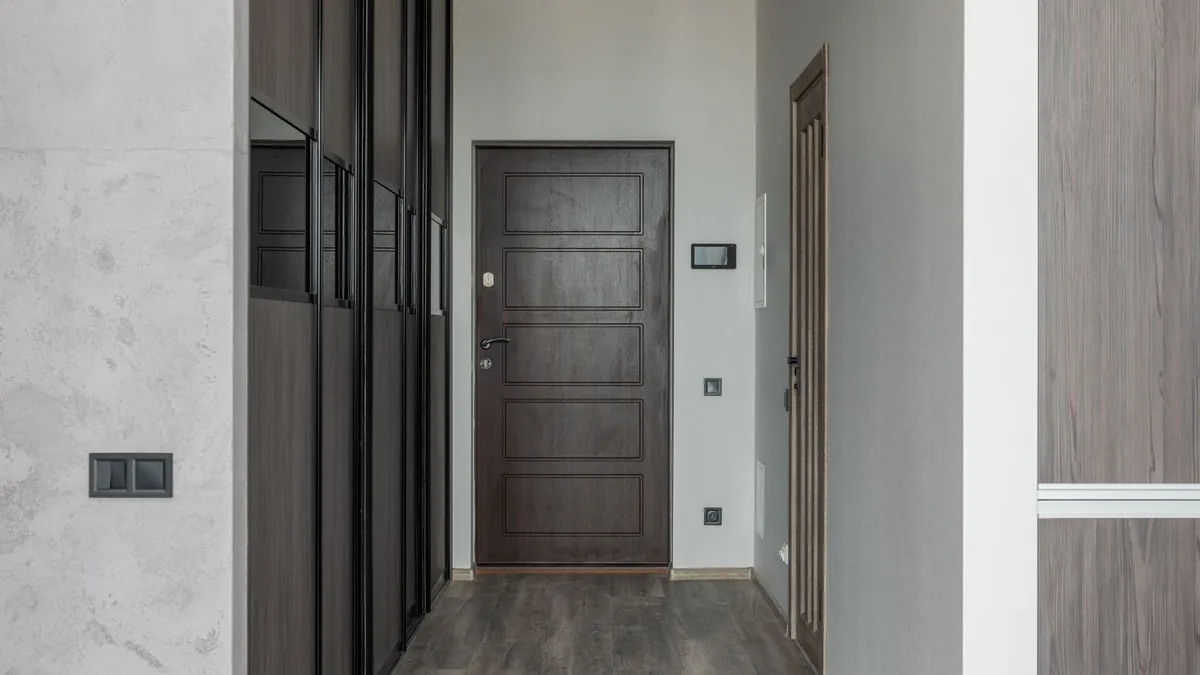
Entryways and hallways follow one simple rule: the rug should be narrower than the space by about 4 to 6 inches on each side, so it never touches the baseboards and the floor edges stay visible. In a hallway, a runner that is too short looks like a mat floating in a long corridor, so choose a length that covers at least two-thirds of the hallway or use a runner long enough to frame the full run.
At entry doors, pick a runner with a low pile or a flatweave, because high-pile rugs trap dirt at the threshold and make the door harder to open. A durable runner takes the abuse so the rest of the house stays cleaner.
Test the size before you buy
Size mistakes are expensive to return, so test the footprint before you order. Use painter’s tape to mark the outline of the rug on the floor, then live with the outline for a day. Sit on the sofa, walk around the table, open the door, and check that the taped area feels right from every angle.
The tape test reveals what photos never do: how much bare floor the rug leaves and whether it crowds the walkways. Adjust the tape, then order. When the rug arrives, give it a day to flatten before you judge the fit.
A rug that is slightly too large can be trimmed or layered, but one that is too small is nearly impossible to fix, so err toward the larger size in every room. Pair it with the houseplant styling guide and you can build a room around a rug and a few green accents without any other changes.