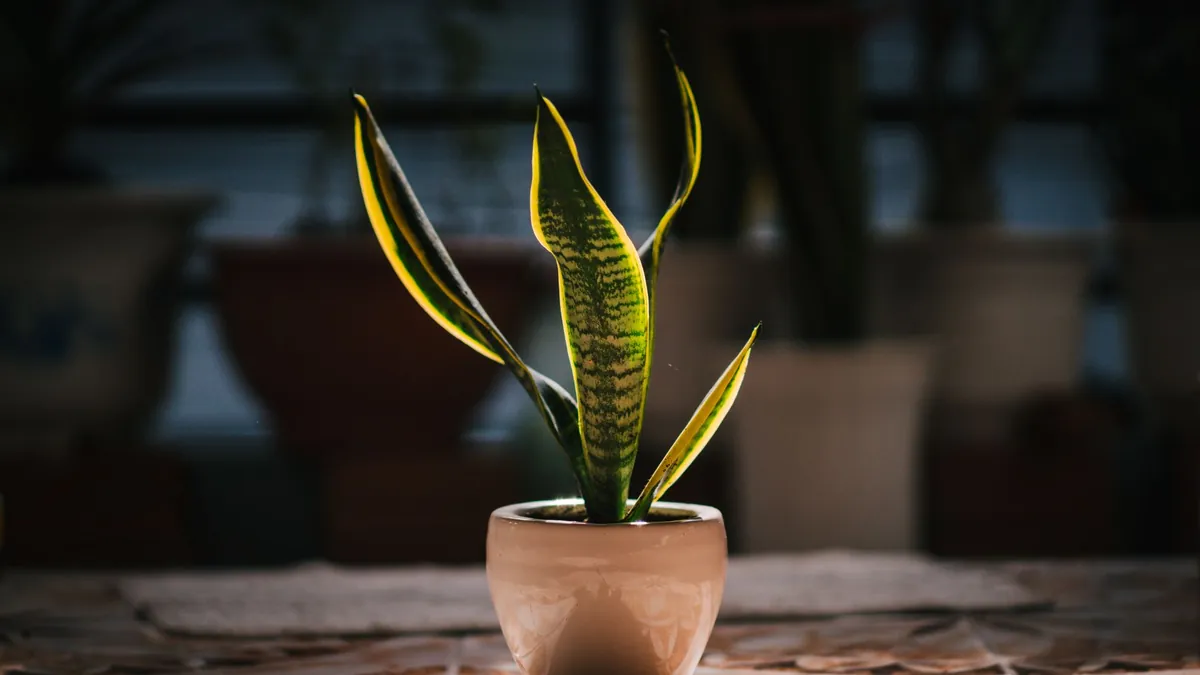
Snake plants are sold as the plant that survives anything. So when the leaves start flopping sideways or the whole pot tips over, it is tempting to assume the plant is just being dramatic. It is not. A snake plant that will not stand up is either sick, underlit, or sitting in the wrong container, and each of those has a different fix.
The good news is that the diagnosis takes about thirty seconds, and most leaning plants can be corrected without losing them. Start with your hands, then work through the six causes below.
Check the base and the pot first
Before you move anything, do two quick tests.
Squish test: press the plant where the leaves meet the soil. Firm, pale, and dry is normal. Soft, dark, or a bad smell at the base means rot, and that is the one situation where you need to act today.
Nudge test: push the pot gently. If the container moves but the plant stays upright, the pot is too light for the plant. If the whole clump leans as one unit, the problem is above the soil, usually light or a fold at the leaf base.
| What you see | Most likely cause | First move |
|---|---|---|
| Base soft, dark, or smelly | Rot from overwatering | Unpot, cut away damaged tissue, repot in fast draining mix |
| Pot tips when nudged | Pot too small or too light | Step up to a wider, heavier pot |
| Leaves pale and stretched, growth thin | Too little light | Move to bright indirect light, rotate weekly |
| Every leaf leans the same way | One-sided light | Turn the pot a quarter turn every week or two |
| Whole clump eased over after repotting | Repotting shock and loose mix | Firm the mix, hold off watering, give it a few weeks |
| One leaf folds near the base | Mechanical damage or a dry spell | Remove the leaf if it does not recover |
1. Overwatering and rot at the base
This is the cause that ends the story if you ignore it. Snake plants store water in their thick leaves, and their roots need air between waterings. When the mix stays wet, the roots and then the rhizome start to break down, and the leaves lose the anchor that held them up.
The NC State Extension Gardener Plant Toolbox describes the snake plant as a plant of dry, well drained ground and warns that overwatering rots the roots, then advises letting the soil dry between waterings from spring to autumn and watering only every one to two months in winter. Rot does not announce itself above the soil until the damage is advanced, which is why the squish test matters more than the watering calendar.
The warning signs are the same ones Iowa State University lists for root rots in houseplants: wilting that starts in the bottom leaves and works upward, plus roots that are mushy and brown instead of firm and white. A plant sitting in wet mix can droop exactly like a thirsty one, so check the soil before you reach for the watering can. If the base is soft, follow the full root rot treatment walkthrough rather than just propping the plant up.
2. The pot is too small or too light
Snake plant leaves can reach four feet while the root system stays compact, so the plant is top heavy by design. UF/IFAS Extension notes that wide clay pots are commonly used for snake plants precisely because the tall, narrow shape topples over otherwise. If your plant lives in a light plastic pot that came from the shop, this is often the whole story.
Fix it by moving the plant into a container that is wider and heavier than the one it is in, with at least one drainage hole and a base that resists tipping. A pot 2 to 5 centimetres wider than the root ball is enough; going much larger leaves soil sitting wet around the roots. If the plant is still in its nursery pot and the roots are circling, read how long a plant can stay in its nursery pot before you decide on the size.
3. Not enough light
In dim corners a snake plant survives but does not build strong tissue. New leaves come in paler, thinner, and longer than they should, and a stretched leaf bends under its own weight. Two things are happening: the plant is reaching toward whatever light it can find, and the leaves are weaker than leaves grown in decent light.
NC State rates the ideal spot as one that gets a few hours of sun a day while still tolerating low light, so bright indirect light near an east or south window is the sweet spot. Move the plant in stages if it has been in a dark corner for months, because a sudden jump into strong sun can scorch the leaves. Once growth is stronger, new leaves stand up on their own.
4. One-sided light and a clump that has drifted
A plant that has lived in the same spot for a year will often lean toward the window as a group, with the whole clump easing in one direction. The leaves are not weak, the plant is simply following the light.
Turn the pot a quarter turn every week or two so each side gets its share, and the lean usually corrects itself over a couple of months. Old leaves that have already bent will not straighten completely, but new growth will come in level with the trunk of the clump.
5. A fold or kink at the leaf base
Snake plant leaves fold where a bend has damaged the tissue, and once the crease sets, that leaf will not recover its shape. Common causes are a knock against a door frame, a pet brushing past, a too tight plant tie, or a long dry spell that left the leaf limp enough to fold. The University of Maryland Extension points out that drought and excess water can produce nearly identical drooping above the soil, so confirm which one you have before changing anything.
If one or two leaves fold while the rest of the plant is firm, cut the damaged leaves at soil level with clean shears. New leaves grow from the rhizome below, so the clump fills in again. If most of the clump folds at once, treat it as a watering problem instead.
6. Loose mix after repotting
Freshly repotted snake plants often spread outward for a few weeks. The mix has not settled around the rhizome yet, so the anchor is loose and heavy leaves drift. Do not water to fix it. Firm the mix gently around the base, let the plant sit for two to four weeks, and water only when the mix is dry through. If you potted into a mix that holds water, the roots will suffer, so repot into something free draining when the plant is due for a change.
How to repot so it stands up
- Let the mix dry out for a few days so the root ball slides free more easily.
- Choose a wide, heavy pot with a drainage hole, 2 to 5 centimetres wider than the root ball.
- Remove the old mix and cut away any soft, dark roots or rhizome pieces with clean shears.
- Set the plant so the rhizome sits just below the surface, not buried deep, and firm the mix around it.
- Water lightly so the mix settles, let it drain fully, then empty the saucer.
- Keep the plant out of harsh direct sun and skip fertiliser for about a month.
If a single heavy leaf still tips after repotting, a loose tie to a short stake will hold it while new growth strengthens. Use something soft, and check that it is not pinching the leaf.
Prevention in five habits
- Water only when the mix is dry through the pot, not on a schedule.
- Never pour water into the centre of the leaf rosette, where it can sit and start rot.
- Keep the plant in a wide pot with a heavy base and a drainage hole.
- Empty the saucer an hour after watering instead of letting the pot stand in water.
- Give bright indirect light and turn the pot regularly so growth stays even.
Snake plants are forgiving, but they are not weightless. Match the pot to the plant, keep the light decent, and let the mix dry between waterings, and the leaning problem rarely comes back.
Sources
- NC State Extension Gardener Plant Toolbox: Dracaena trifasciata
- University of Maryland Extension: Overwatered Indoor Plants
- Iowa State University Extension: Diagnosing Houseplant Problems Related to Poor Culture
- UGA Extension: Snake plant, a striking and durable houseplant
- Penn State Extension: Snake Plant, A Forgiving, Low-maintenance Houseplant


