Root rot is the most common way a houseplant dies, and it almost never happens overnight. The roots suffocate slowly in soil that stays wet, the damage stays hidden below the surface, and the first obvious symptoms show up only when the plant is already in trouble. Most owners who “suddenly” lose a plant to rot have been watering it faithfully for weeks.
The good news is that root rot is easy to identify once you know what to look for, and plants catch early are usually salvageable. If a plant still has firm pale roots and a solid stem, there is a real chance it pulls through. Here is how to check the roots, what to cut away, and how to prevent the same thing from happening to the next pot.
What root rot actually is
Roots need oxygen. In a pot, air moves through the gaps between soil particles, and those gaps refill only after the mix drains and dries a little. When the potting mix stays saturated, water fills the air spaces and the roots slowly suffocate. The damaged tissue is then colonised by soil organisms that thrive in wet conditions, most often the water molds Pythium and Phytophthora.
That second stage is what makes root rot so destructive. Wisconsin Horticulture explains that water mold root rot organisms prefer wet soil and produce thick-walled spores that survive in soil for years, so the pathogens do not need a new source of infection to appear. Once they take hold, they spread into roots that were still healthy, and simply letting the surface dry out no longer fixes anything. The infected roots have to be removed.
Early signs worth acting on
Root rot announces itself above the soil long before the plant collapses. Watch for a combination of these signals:
- Lower leaves turning yellow and dropping while the upper leaves still look fine
- Wilting that does not improve after watering, because damaged roots cannot move water upward
- Soil that is still damp several days after watering, and a pot that feels unexpectedly heavy
- A soft, dark, or mushy stem right where it meets the soil
- A sour or musty smell from the pot, sometimes with fungus gnats hovering around the surface
The RHS lists dark, mushy roots and simultaneous yellowing of old and new leaves among the classic signs of overwatering, and notes that plants usually recover quickly once the growing conditions are corrected. One warning: brown leaf tips on their own are a different problem. If the leaf edges are dry and papery but the plant is otherwise firm, read the guide to brown leaf tips before you unpot anything.
Check the roots before you do anything
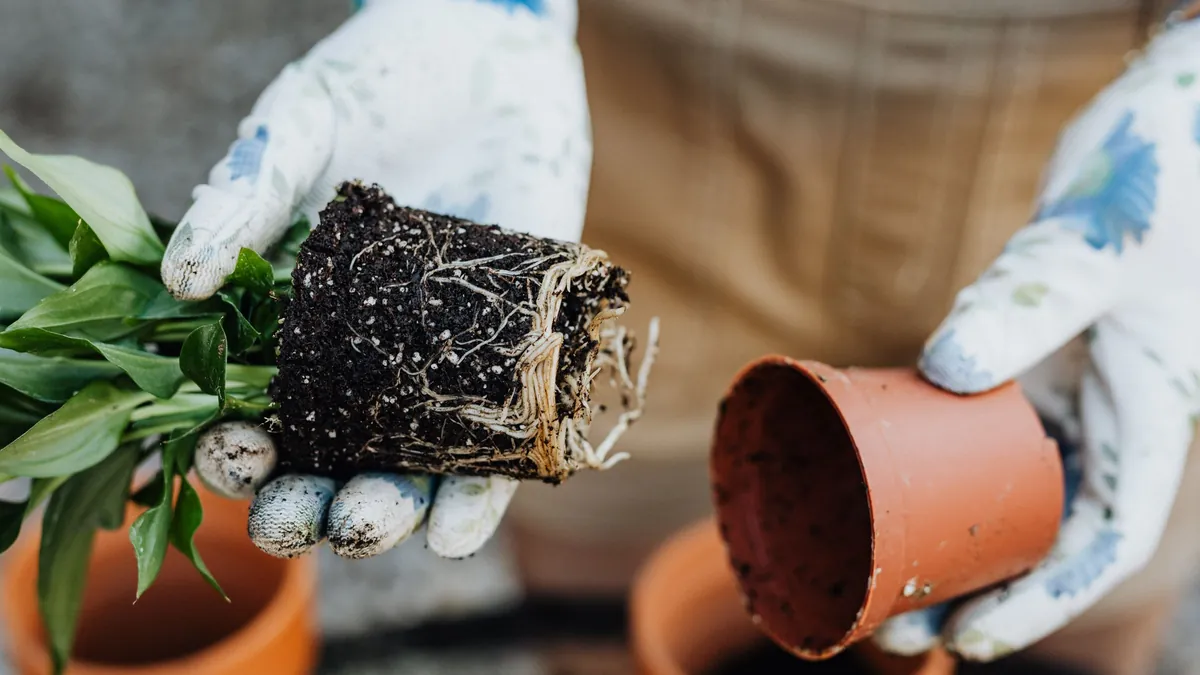
The only reliable diagnosis happens out of the pot. Water the plant lightly a day before, then turn the pot on its side, support the base of the stem, and slide the root ball out. Crumble away the loose mix with your fingers.
Healthy roots are pale, firm, and spread through the soil. Rotted roots are brown or black, soft, and often slimy, and they come apart in your hand or strip off like a wet sleeve when you pull gently. A sour smell confirms it. If most of the root ball is white and firm and only a small section is dark, you have caught it early.
How to save a plant with root rot
Work through these steps in one sitting. Leaving a plant half-treated in wet soil only gives the rot more time.
- Stop watering and move the plant out of direct sun to a bright spot with moving air. Do not fertilise it.
- Unpot and remove all the old mix. Rinse the roots under room-temperature water so you can see what is firm and what is not.
- Cut away every soft, brown, or black root with clean sharp scissors, cutting back into healthy tissue. Wipe or dip the blades between cuts if the rot is widespread.
- Repot into fresh, free-draining mix and a clean pot with drainage holes. If you removed a lot of roots, go one size smaller, because too much soil around a small root ball stays wet far too long.
- Wait five to seven days before watering, then water lightly and let the pot drain completely.
- Keep the plant out of strong direct sun for a couple of weeks. Fewer roots mean less water uptake, so full sun can scorch the leaves faster than the plant can replace the moisture.
If the rot has reached the stem and the base is mushy well above the soil line, the plant is usually beyond saving. Take stem tip cuttings from the healthiest growth instead, since the top of the plant may still be clean even when the base has rotted. Succulents in particular tend to rot from the base upward, and dropping or translucent leaves are the early hint that the soil is staying wet.
What recovery looks like
Expect two to four weeks before you see clear progress, and do not judge the plant by the leaves it already has, because damaged leaves will not heal. The proof is new growth: a fresh leaf, a new shoot, or roots appearing at the drainage holes. If you removed most of the roots, the mix around a small root ball dries slowly, so check the top few centimetres before each watering rather than following a calendar.
If nothing changes after a month and the stem starts to soften, the infection won. Clean the pot thoroughly with hot soapy water before using it again, and start fresh with a plant that suits your light and your watering habits.
Stop it from coming back
Prevention comes down to making sure the roots get air between waterings. The RHS houseplant growing guide advises always using containers with drainage holes, because roots need air to breathe and waterlogged soil drowns them.
- Always use a pot with at least one drainage hole, and empty the saucer after watering.
- Water when the top 2 to 3 cm of mix feels dry, not on a fixed weekly schedule.
- Choose a pot only 2 to 5 cm wider than the root ball, and step up a size gradually.
- Add perlite, bark, or grit to standard potting mix so it drains faster and holds more air.
- Keep the mix out of heavy rain if the plant lives on a balcony or patio.
- Repot every two to three years, since old mix compacts and loses the air pockets roots rely on.
A plant that has recovered from root rot is often a stronger plant in the end, because you have learned how it likes to be watered. Check the soil with a finger or a wooden stick before every watering, and the next case of root rot is far less likely.


