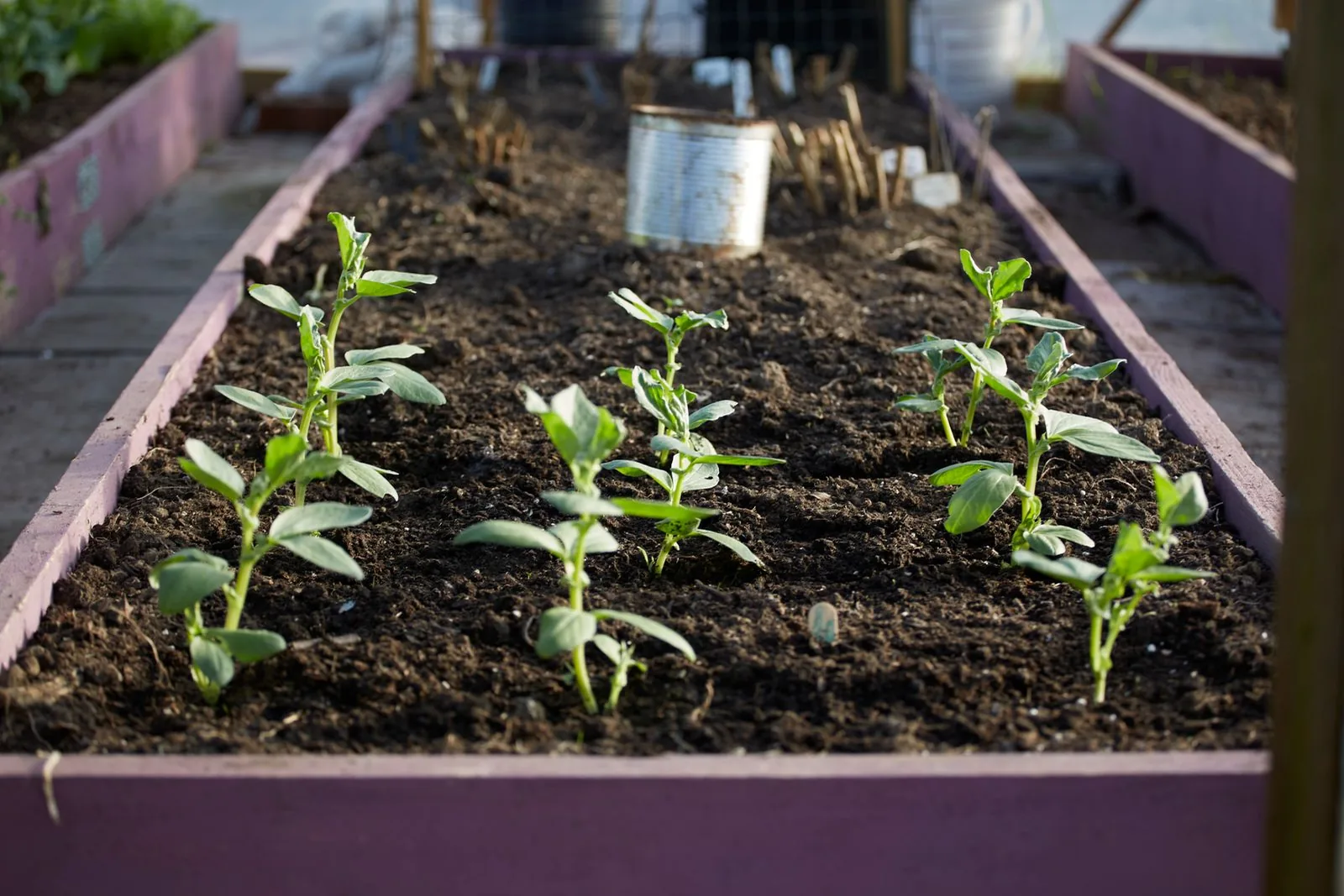
A raised bed is a container that happens to sit on the ground. Water leaves it from the surface, and also through the sides exposed to sun and wind, which is why the same soil that stays damp in a border can be dust in a raised bed by mid-afternoon. A bed that dries out between waterings is not a mystery. There are five common causes, and each one has a fix that takes an afternoon or less.
Why a raised bed dries faster than the ground
Oregon State University Extension is direct about it: mulch is worth using on raised beds in particular, because water evaporates more readily from a bed than from flat soil. Exposed walls and a loose, light fill mean less water held for the same volume of soil.
Utah State University Extension adds the second half of the explanation. A raised bed warms earlier in spring and runs hotter in summer, and higher soil temperatures increase evaporative moisture loss, so the bed needs more frequent irrigation than the same plants in the ground.
Before changing anything, match your bed to one row of the table below.
| What you see | What it usually means |
|---|---|
| Surface is dust, but the soil 4 inches down is damp | Mulch is missing and evaporation is doing the damage |
| The whole bed is dry a day after watering | The fill holds too little water, or the bed is too shallow |
| Water beads on the surface and rolls to the edge | The top layer has gone water repellent |
| Only the top inch is wet after a long soak | Water is running past the root zone instead of into it |
| Plants wilt at midday and recover by evening | Heat and wind stress, not a dry root zone yet |
To tell a damp surface from a damp root zone, water the bed, wait two or three hours, then dig one spade deep beside a plant. Colorado State University Extension recommends a soil probe for checking the rooting zone at 6 to 8 inches, and a trowel reaches the same depth. If the soil at 6 inches is damp, the bed is fine and only the surface is drying out.
Cause 1: The fill is mostly organic matter
Rutgers NJAES fact sheet FS1328 warns that many products sold as garden soil or topsoil are almost entirely organic material, bark, peat, coir or compost, with little or no mineral content. That matters in two ways. Organic matter that has dried out “becomes hydrophobic and resists re-wetting,” and without mineral particles it slumps as it decomposes, losing the pore structure that gave the mix its water-holding capacity.
University of Maryland Extension gives the target: fill a raised bed with compost and topsoil at about 1 part compost to 2 parts topsoil, or 1 to 1, so organic matter ends up at 25 to 50 percent of the volume. Rutgers adds that where organic growing media is used, it should be refreshed or replaced every year.
The fix is to add mineral topsoil rather than more compost. If the bed currently holds mostly compost, work 1 to 2 inches of topsoil into the top few inches before adding anything else.
Cause 2: The bed is too shallow for what is planted in it
A shallow bed has a small reservoir, and the plants in it can empty that reservoir in a day. Maryland’s guidance is specific: a bed on a hard surface needs at least 8 inches of soil for leafy greens, beans and cucumbers, and 12 to 24 inches for peppers, tomatoes and squash, and these beds dry out quickly. Rutgers recommends a minimum of 12 inches for root-zone volume and drainage.
The fix is depth. Either raise the walls, or topdress each season with a blend of compost and topsoil, which deepens the root zone gradually. When you next plan a bed, choose the depth for the crops rather than for the lumber that happened to be on hand, as the guide to starting a vegetable garden sets out.
Cause 3: Water is applied too fast for dry fill to take it
When the surface has dried hard, a fast pour follows one path every time, down the side wall or through a crack, and past the roots. Rutgers notes that water repellency in dry organic media limits absorption “in the days following,” which is why a long soak can leave the middle of the bed dry.
Colorado State University Extension gives a working measure: vegetables use about a quarter inch of water per day in typical summer weather, so a garden watered every four days needs about 1 inch per watering. UConn Extension supplies the conversion, 1 inch of water is roughly 62 gallons per 100 square feet. A 4 by 8 foot bed covers 32 square feet, so it takes about 20 gallons to apply an inch.
The fix is to water in two or three passes a few minutes apart. The first pass wets the surface and breaks the repellency, and the following passes soak in instead of running off.
Cause 4: The surface is bare
Penn State Extension states that mulch reduces evaporation rates and increases the amount of water able to enter the soil from rain or irrigation. Oregon State’s guidance is 2 to 4 inches of coarse compost, wood chips or bark on the surface.
The fix is 2 to 3 inches of straw, shredded leaves or compost, pulled back an inch or two from the stems. Home compost works well here, and composting at home covers how to produce enough of it for a topdressing every season.
Cause 5: Wind and sun on exposed sides
Open ground is buffered by the soil around it, a raised bed is not. Utah State links warmer bed soil to more evaporation, and Maryland notes that beds standing on paving or gravel take extra stress from absorbed and reflected sunlight.
The fix is to reduce exposure rather than to pour more water. Water early in the morning, run a soaker hose or drip line instead of a sprinkler, since Utah State describes drip as the method best suited to raised beds, and throw shade cloth over a bed during a heat wave. A windbreak on the exposed side of an open garden slows the same loss.
A routine that keeps the root zone damp
- Water deeply and less often, about 1 inch per watering, and wait until the top 2 to 4 inches of soil has dried before the next one.
- Check at depth. Dig 6 inches down beside a plant instead of judging by the color of the surface.
- Mulch after planting and top the mulch up mid-season as it breaks down.
- Group thirsty crops together, so the shallow end of the bed is not being soaked for the sake of the deep end.
- Topdress 1 to 2 inches of compost and topsoil each season, because organic matter shrinks as it decomposes and the bed level drops with it.
- Put drip or a soaker hose on a timer for the hottest weeks, which also keeps water off the leaves.
Comparing how the two systems behave in a dry spell is worth doing once, and the raised beds and in-ground beds comparison covers the trade-offs. The pattern behind most fast-drying beds is the same: too much organic matter and not enough mineral soil, too little depth, or a bare surface. Fix the one that applies, water in passes, and the bed stops running dry within a week.
Sources
- Oregon State University Extension: Improving Garden Soils with Organic Matter (EC 1561)
- Utah State University Extension: Raised Bed Gardening
- University of Maryland Extension: Soil to Fill Raised Beds
- Rutgers NJAES: Soil for Raised Beds (FS1328)
- Penn State Extension: Soil Health in Raised Beds
- Colorado State University Extension: Irrigating the Vegetable Garden
- UConn Extension: Helping Vegetable Crops Through Drought and Heat