Cut back in fall only the plants that carried disease, pests, or ripe weed seed, and leave everything healthy standing. That is the whole rule. Diseased tomato and squash vines, mildewed peony foliage, spotted iris, and seedy weeds go to the trash, while sound perennial stems, seed heads, and fallen leaves stay in place as winter habitat for bees and birds.
Fall cleanup goes wrong when it is treated as a single job: cut everything down, rake everything up, and leave the beds bare. That approach removes next year’s habitat along with this year’s debris, and it does not even control disease, because the plants that matter for disease are specific ones you can pick out in a few minutes.
The better rule is to sort plants into two piles as you work. Anything that carried disease, pests, or ripe weed seed leaves the garden. Healthy stems, seed heads, and leaves stay or get moved somewhere useful. This guide covers what belongs in each pile, how to handle leaves, and how to time the work so it is finished before the ground freezes.
What Is the Difference Between a Disease Carrier and a Habitat Plant?
Every plant in your beds is either a disease carrier or a habitat plant right now, and often it is one or the other with no middle ground. Dead foliage on a plant that showed blight, mildew, or leaf spot is a disease carrier, because those organisms overwinter in the debris and start the next season’s outbreak from it. Penn State Extension’s fall cleanup guidance is blunt on that point: diseased plants should be completely removed and bagged for disposal.
Healthy perennial stems and seed heads are the opposite. They are winter housing and winter food. The practical challenge is that the two piles look similar from the kitchen window in November, which is why it helps to walk the beds once with a plan instead of tidying by feel.
What Should You Cut Back in Fall?
Start with the plants that would cause problems next spring.
- Vegetable plants that showed disease. Tomato, squash, cucumber, and bean vines are the usual suspects. Pull or cut them at soil level, bag them, and send them out with the trash or yard waste. Do not add them to the compost bin.
- Fallen fruit and rotting vegetables. Fruit left under trees and vines feeds rodents and wasps and keeps spores in place. Pick it up and discard it.
- Diseased perennial foliage. Peony, iris, and lily foliage that showed spotting or mildew should be cut back to 3 to 5 inches and removed rather than left standing, according to Penn State Extension’s cleanup guidance.
- Weeds before they drop seed. Fall is the last chance to stop next year’s seed bank in one afternoon. Pull or dig perennial weeds now, and read the timing notes in this guide to removing weeds without herbicides if you want to avoid spraying.
- Frost-blackened annuals and spent container plants. Pull them roots and all, or cut them at soil level and leave the roots to decay in place if the soil is already cold and wet.
What Should You Leave Standing, and Why?
Most healthy perennials can stay up all winter. Hollow and pithy stems are used by stem-nesting bees, and the seed heads feed birds.
You might expect that cutting stems in fall destroys those bees, but the timing works out better than that. A study by NC State Extension, which sampled nearly 3,000 stems from gardens across the state, found that first-winter stems were not occupied at all, because bees need a cut or broken end to get inside. That makes winter, between the first fall frost and the last spring frost, a safe window to trim. Leaving a stubble 12 to 24 inches tall gives bees those entry points for the following season.
Seed heads are worth keeping for a different reason. Coneflowers, sedums, black-eyed Susans, and Joe-Pye weed hold seeds that finches, chickadees, and juncos work through in winter, and the dried stems add structure when everything else is flat. University of New Hampshire Extension recommends cutting perennials back to about 15 inches in spring rather than in fall, which keeps both the food and the shelter in place through the cold months.
If a perfectly tidy bed matters to you, the advice from Penn State Extension is simply to put it off: leave the cleanup until April.
RHS, the Royal Horticultural Society, takes a middle position in its guide to cutting back perennials: selective autumn cutting keeps the dried, bleached flowerheads while removing only the material that shows decay or fungal growth. If you prefer that middle path, cut stems back to a staggered height so the bed reads as intentional rather than unkempt.
Should You Leave the Leaves in the Beds?
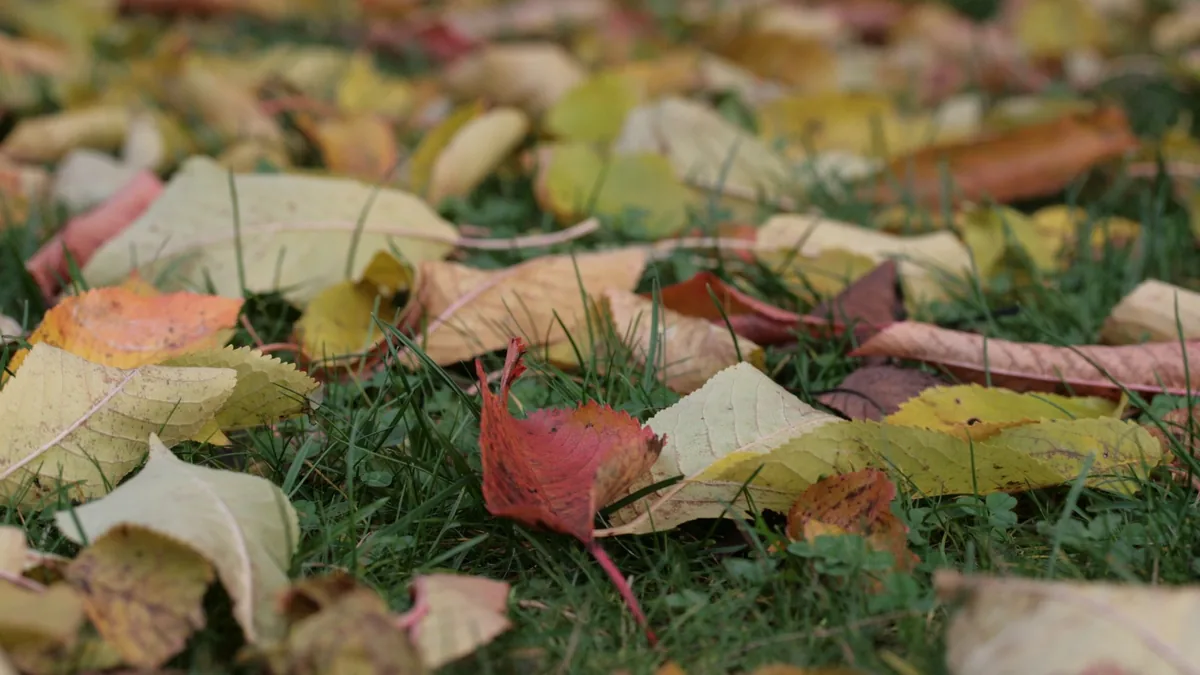
Fallen leaves are the cheapest mulch you will get all year, and they are also winter cover for a large share of the insects in your yard. Most butterflies and moths do not migrate; they spend winter as eggs, caterpillars, chrysalises, or adults tucked into leaf litter, which is why Illinois Extension asks gardeners to leave at least some leaves in place.
Where the leaves end up matters more than whether you keep them:
- Rake or blow. Keep leaves whole. Shredding destroys caterpillars, cocoons, and eggs along with the leaves.
- Move them off the lawn and into the beds. A thin scattered layer on grass is harmless, but a thick mat smothers turf. Take the bulk to beds, around tree bases, and around shrubs.
- Go easy on blanket mulching. Illinois Extension notes that roughly 70 percent of native bee species nest in the ground, so it helps to leave some patches of bare soil instead of covering every square foot.
- Keep leaves out of the street. Anything that reaches the storm drain is a nutrient problem downstream rather than mulch.
Clemson’s Home and Garden Information Center puts the same point plainly: leaves are not litter, and combining them with standing dead plant material gives insects and other invertebrates their best overwintering sites, per Clemson HGIC’s guide to fall leaves.
Timing: Work From Frost, Not From the Calendar
Two dates organize the whole job: the first light frost, which stops growth, and the first hard freeze, which closes the soil.
Tender plants need attention first. Iowa State University Extension advises taking action when overnight temperatures are forecast into the mid-30s Fahrenheit, by moving containers indoors, covering in-ground plants, or closing a cold frame. Perennials, shrubs, and small trees do not need that protection, because they need cold to complete dormancy.
Everything else in the cleanup, from cutting stems to mulching, fits between those two dates on dry days. In cold-winter areas that is roughly late October into November; in mild-winter areas it slides later, and the pattern that matters is soil that is cold but not frozen. Mulch after the top inch or two of soil has frozen if voles are a problem in your area, since an early layer gives them a covered route to bark and crowns.
Lawn, Beds, and Hardscape
A few jobs in this group are worth doing well because they prevent expensive repairs.
| Task | Timing | Why it matters |
|---|---|---|
| Keep mowing until growth stops | Through late fall | Long grass left under snow mats and invites snow mold |
| Last cut slightly shorter | Once growth has stopped | Shorter blades reduce matting and vole cover |
| Mulch beds 2 to 3 inches | After the top of the soil freezes | Insulates roots and crowns, keeps mulch off trunks |
| Water young trees and shrubs deeply | Before the ground freezes | Roots keep taking up water until the soil locks up |
| Drain hoses and irrigation lines | Before the first hard freeze | Trapped water splits fittings and pipes |
| Empty ceramic and terracotta pots | Before the first hard freeze | Freeze and thaw cycles crack the walls |
| Clean, dry, and oil hand tools | End of season | Soil and sap cause rust over winter |
Where the Cut Material Goes
Healthy stems and leaves become next spring’s compost, so long as you keep diseased material out of the bin. If you are still learning the balance, the beginner’s guide to composting at home explains browns, greens, and how much water a working pile wants. Leaf mold and finished compost are also the simplest way to loosen tight ground, and the steps in improving clay soil show how to work either one in without digging the whole bed over.
What This Looks Like as a Routine
Walk the beds once and pull anything diseased, seedy, or rotten. Rake leaves into the beds instead of bagging them. Cut stems only where tidy lines matter, and leave 12 to 24 inches standing when you do. Mulch after the ground starts to freeze, drain the water lines, and store the tools dry. Then leave the rest alone until April, when the stems you kept fed the birds all winter and the bees are ready to move into them.
Sources
- Penn State Extension: Fall Garden Care for Pollinators
- Penn State Extension: Nurturing Nature, Fall Cleanup Strategies
- UNH Extension: Leaving Leaves and Flower Stalks for Wildlife
- NC State Extension: Garden Cleanup for Pollinators, Trim Perennial Stems in Their First Winter
- Illinois Extension: Fall Garden Cleanup with Pollinators and Wildlife in Mind
- Iowa State University Extension: How to Protect Plants from Frost and Freeze
- Clemson HGIC: Fall Leaves, To Leave or Not to Leave
- Clemson HGIC: A Messy Winter Garden Preserves Beneficial Insects
- OSU Extension: Should I Wait to Clean Up the Garden to Help Conserve Insects?
- RHS: Perennials, Cutting Back