A compost pile that steamed through the summer can sit completely cold a few weeks later, and the reason is rarely mysterious. Heat is a byproduct of microbial activity, so when the thermometer stops climbing, one of the four things those microbes need has run short: nitrogen, oxygen, water, or enough bulk to hold warmth.
This guide covers the six reasons a pile goes cold, in the order worth checking, then walks through a restart you can do in one afternoon with a fork and a hose. The same checks work for an open heap, a wire bin, and a tumbler.
What heat actually tells you
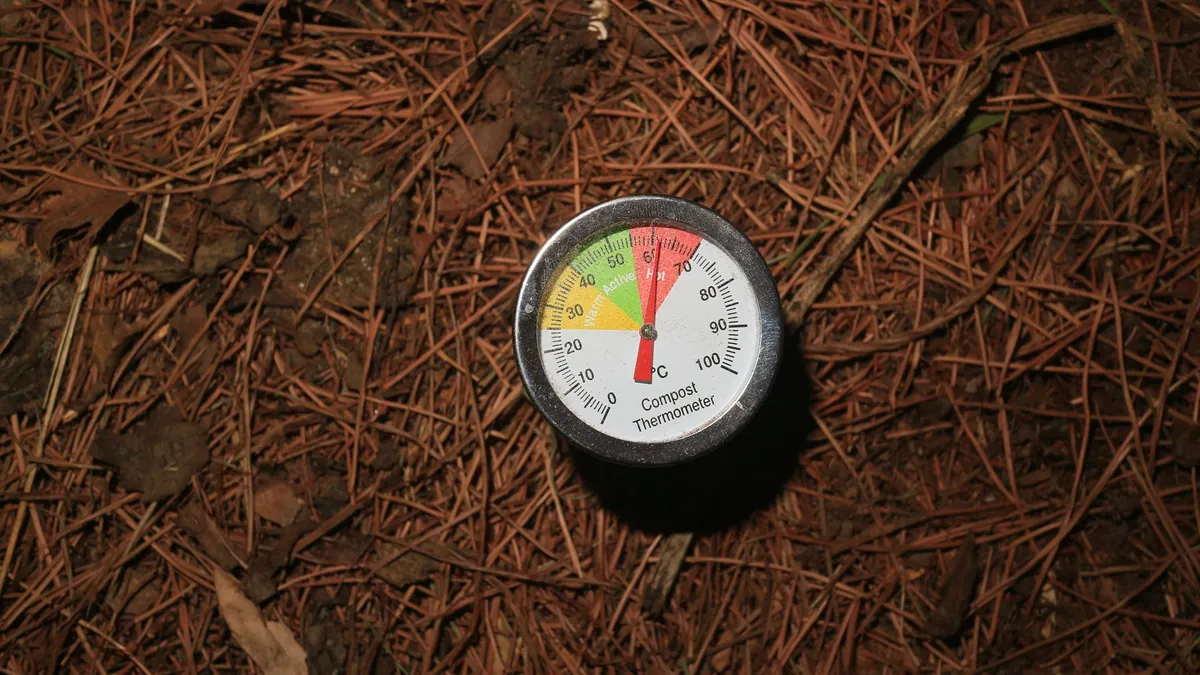
Cornell University’s composting program explains that decomposition is most rapid between 90 and 140 F (32 to 60 C). Below 90 F the process slows considerably, and above 140 F most of the microorganisms cannot survive. A well maintained backyard pile can reach 130 to 160 F in the center, according to the US EPA’s home composting guide, which is hot enough to reduce many weed seeds and pathogens.
The temperature you read is the balance between heat the microbes produce and heat the pile loses through the surface and through aeration. That balance is why a cold pile is usually a physical problem, not a biological one: the bacteria are still there, they just do not have what they need.
1. The pile is too dry
Microbes live in thin films of water. When the material dries out, activity slows and can stop entirely, which the EPA lists as the first thing to check when a pile stalls: if a pile is too dry, activity slows or ceases, and the fix is to moisten it and turn it while you do.
The field test is a squeeze. Grab a handful from about a foot inside the pile and close your fist. It should feel like a wrung-out sponge and release a drop or two of water. If your hand stays dry, water the pile as you turn it, a few litres per layer, rather than flooding the top and hoping it soaks through.
2. The pile is too wet, so the air is gone
The mirror image problem is worse in some ways. When every pore between the particles is filled with water, oxygen cannot reach the middle of the pile, the aerobic bacteria that generate heat shut down, and anaerobic bacteria take over. You get a cold, slimy, sour-smelling heap instead of a hot one.
The EPA’s guidance for a bad odor is the same fix as for a soggy pile: mix in dry brown material and turn the pile to open it up. Shredded leaves, straw, dry cardboard and wood chips all work. If the pile sits in a low spot that collects runoff, or you left a tarp on through a wet spell, correcting the drainage and airing the pile matters more than anything you add.
3. There is much more carbon than nitrogen
Carbon-rich browns are the bulk of most piles, and nitrogen-rich greens are the fuel that gets microbes multiplying. Penn State Extension suggests a target of about 25 to 30 parts carbon to 1 part nitrogen by weight, but a carbon to nitrogen ratio near 25 to 30 to 1 is easier to hit by volume: roughly two to three parts browns to one part greens.
A pile that looks and feels like a bag of autumn leaves probably has too much carbon. Grass clippings, vegetable and fruit scraps, coffee grounds and fresh plant trimmings are the greens that restart it. The EPA’s advice for a pile that is not heating up is exactly this: mix in greens and turn the pile.
4. The pile is too small to hold its own heat
Heat production depends on the size of the pile, and so does heat loss. A small heap has a large surface area relative to its volume, so warmth escapes faster than the microbes can replace it. Cornell’s compost physics page makes the point with an indoor comparison: a well designed system over 10 gallons reaches 40 to 50 C in two to three days, while a soda-bottle-sized reactor of the same material peaks far lower simply because it is so small.
For an outdoor pile, extension programs converge on a working minimum of about 3 feet in each direction, so West Virginia University Extension suggests a heap at least 3 feet wide, 3 feet long and 3 feet tall, with 5 feet as a sensible ceiling. If your material is spread across two small bins, combining it into one larger heap is often the single fix that gets a pile hot again.
5. The middle is compacted and starved of oxygen
Even a correctly sized pile can seal itself off. Grass clippings mat into an airless layer, wet kitchen scraps slump into a dense lump, and a pile that has settled for months has very little pore space left. Turning is the remedy, and Cornell describes why it works: when an active pile is turned, the temperature usually climbs to a new peak because the oxygen supply is replenished and fresh surfaces are exposed.
Turn with a garden fork, pulling material from the outside edge into the middle and breaking up clumps as you go. Keep the pile below about 65 C; if it gets hotter than that, turning and aerating also brings the temperature down so the beneficial microbes survive. A coarse layer of twigs or wood chips mixed through the pile helps keep air channels open between turns.
6. It is cold outside, or the pile has finished
Two quiet piles are not problems at all. Ambient temperature is one of the things that determines how warm a pile runs, so a heap in the middle of winter can sit near freezing while the same material heats up again in spring, and piles in very cold weather need to be larger than usual to offset surface heat loss. Once temperatures fall below about 70 F (21 C), the process is nearly complete.
The other false alarm is a mature pile. After the thermophilic stage is over, the temperature drops and does not come back when you turn it, and the pile moves into a curing phase. If the material is properly moist and turning no longer produces a rise in temperature, the batch is simply finished, which is the outcome you wanted.
Restart a stalled pile in one afternoon
- Dig into the center. Pull out a forkful from a foot inside the pile. Note the smell: sour or ammonia means too wet and airless, earthy means the pile is fine but idle.
- Do the squeeze test. Too dry, water each layer as you rebuild. Too wet, add dry browns.
- Break everything apart. Matting is the enemy. Chop stalks, split clumps of grass, and mix coarse browns through the pile.
- Rebuild it as one heap. Aim for at least 3 feet across, alternating two to three parts browns with one part greens, and finish with a layer of browns on top.
- Wait two or three days, then check. Push a thermometer or a metal rod 6 to 12 inches into the middle at the same time each day. Warmth building from the center means it worked.
| Symptom | Likely cause | Fix |
|---|---|---|
| Dry, crumbly, no heat | Not enough moisture | Water while turning, cover the top |
| Soggy, sour smell, cold | Too wet, no oxygen | Add dry browns, turn, stop watering |
| Looks like a leaf pile | Too much carbon | Mix in greens and turn |
| Warm only at the edges | Pile too small | Combine into one heap at least 3 ft across |
| Hot, then cold after a few weeks | Normal cycle or curing | Turn once; if it stays cold and damp, it is done |
What to do while you wait
Keep a bag of dry leaves or shredded cardboard next to the bin, because you will need browns every time you add kitchen scraps, and covering each addition with a few inches of browns is what keeps smells, flies and rodents away. If you are new to the process as a whole, the beginner’s guide to composting at home covers the brown to green ratio, bin options and what to keep out of the pile.
Your first finished batch goes furthest in heavy soil, where compost does more for structure than any bagged product; the steps in improving clay soil show how to work it in. And because a cool pile does not kill weed seeds, keep seed heads and runners out of the bin entirely and deal with weeds before they set seed instead.