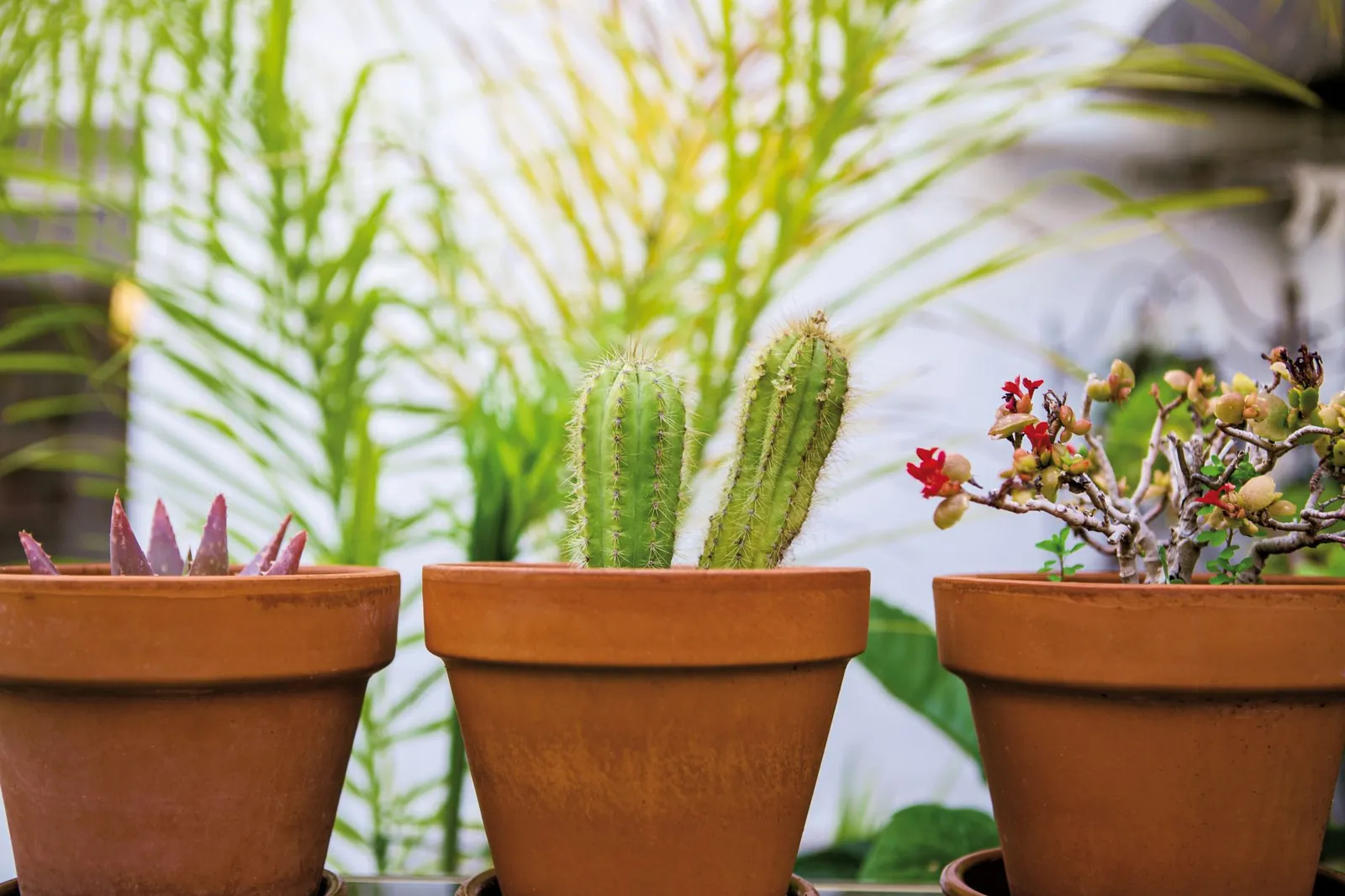
Few plant decisions look smaller than choosing a pot, yet the material quietly sets how often you water and how forgiving the plant is when you get it wrong. Terracotta and plastic behave differently in one specific way, and almost everything else follows from it.
The short answer is that porous clay dries soil faster while plastic holds moisture in. Which one you want depends on the plant in the pot and on your own watering habits, not on which is fashionable.
At a glance
| Terracotta (unglazed clay) | Plastic | |
|---|---|---|
| Drying speed | Fast, wicks moisture through the walls | Slow, holds moisture in |
| Weight | Heavy, resists tipping | Light, easy to move |
| Roots get | Air and moisture through the porous wall | Only what reaches the drainage holes |
| Salt deposits | Crust forms on the outside | Salts stay in the soil |
| Insulation | Thick walls buffer temperature swings | Thin walls offer little protection |
| Best for | Heavy-handed waterers, cacti, succulents | Moisture lovers, forgetful waterers, large plants |
What pot material actually changes
An unglazed clay pot is porous. Air and moisture pass through the wall, and the fine roots at the edge of the root ball use that exchange. The same wall acts like a wick, pulling excess moisture out of the mix and releasing it into the air, as Nebraska Extension’s guide to clay and plastic pots describes.
A plastic pot has no such wicking action. Water leaves only through the drainage holes and by evaporating from the surface, so the mix stays wet noticeably longer. That single difference explains the rest of the trade-offs: it is not that one pot is healthier, but that each pulls the soil in a different direction.
Porous clay rewards a heavy hand
If you water on a schedule, or whenever the plant looks slightly sad, terracotta gives you a safety margin. The wicking wall removes surplus moisture that would otherwise sit around the roots, which is why the same guide notes that gardeners with a heavy hand at watering usually do better with clay, and that cacti and other plants wanting dry, well-drained soil also prefer it.
The cost is the other side of that coin. Clay dries quickly, so moisture-loving plants can be thirsty all the time, and small pots may need water every few days in summer. Thick clay walls do insulate roots from fast temperature swings, which helps on a cold windowsill or an exposed patio, and the weight keeps tall plants from tipping.
Plastic holds water where forgetful waterers need it
Plastic’s sealed surface suits anyone who waters less often, plants that prefer even moisture, and large pots that are hard to keep hydrated. Because nothing wicks out through the sides, a fern or a calathea in plastic stays comfortable far longer than the same plant in clay.
The trade-off is that overwatering becomes easier, because the gap between “watered” and “too wet” is narrower, and a pot left sitting in a full saucer keeps the lower roots saturated. That situation, not the plastic itself, is what leads to root rot in houseplants. Thin walls also give roots little insulation: dark plastic can act as a solar collector in direct sun and heat the potting mix to levels that damage roots.
Salt buildup is the hidden cost of plastic
Every watering leaves a little dissolved fertilizer behind as the water evaporates, and those soluble salts concentrate in the soil over time. Symptoms include stunted growth, brown leaf tips, dropped lower leaves, and wilting even when the mix feels moist. In clay some of the salt escapes through the wall and shows up as a white crust on the outside, which is ugly but useful: you can see it.
Plastic hides it, so salts gather in the mix and the only way out is a flush. University of Maryland Extension recommends leaching houseplants every four to six months by pouring at least twice the pot’s volume of water through the soil and letting it drain completely. In plastic this step is not optional. If brown tips keep returning, that habit is worth checking alongside the plant’s other needs.
Which one should you pick?
Work through these in order and the choice usually makes itself.
- Water often or on a fixed schedule: terracotta, which forgives the extra water.
- Water rarely, or the plant sulks when it dries out: plastic.
- Cactus, succulent, or a plant that dries between waterings: terracotta.
- Fern, calathea, or anything wanting even moisture: plastic.
- A large pot you can barely lift: plastic, for weight alone.
- A cold windowsill or a sunny outdoor spot: thick clay for insulation, and avoid black plastic in full sun.
The plant’s habit should win over the look of the pot. A moisture lover in clay keeps you watering daily, while a dry-loving cactus in plastic is a rot risk waiting for the first week of inattention.
Size and drainage matter more than material
Whatever you choose, the pot needs drainage holes and it needs to be the right size. Moving a plant into a pot far bigger than its root ball leaves a large volume of soil that stays wet with no roots to drink it, a common cause of rot that has nothing to do with clay or plastic. When you size up, go one step only, and use fresh mix. Our guide to repotting a houseplant step by step covers how to judge the root ball and how much to increase the pot.
If you bottom water or keep the surface damp, the top layer of soil can stay wet enough to invite fungus gnats. Letting the top inch dry between waterings, and giving the pot a proper top-down flush now and then, handles both the gnats and the salt problem at once.
A routine that works in either pot
Forget the calendar and check the soil instead. Push a finger two inches into the mix; if it is dry at that depth, water. Lifting the pot and judging its weight does the same job once you know how a freshly watered pot feels. Water thoroughly from the top until it drains out the bottom, then empty the saucer so nothing stands in water, and let the mix dry to that two-inch depth again.
Do that, and the pot material becomes a small tuning knob rather than a source of problems. Choose the one that matches your habits, keep the drainage holes clear, and flush the soil a few times a year.


