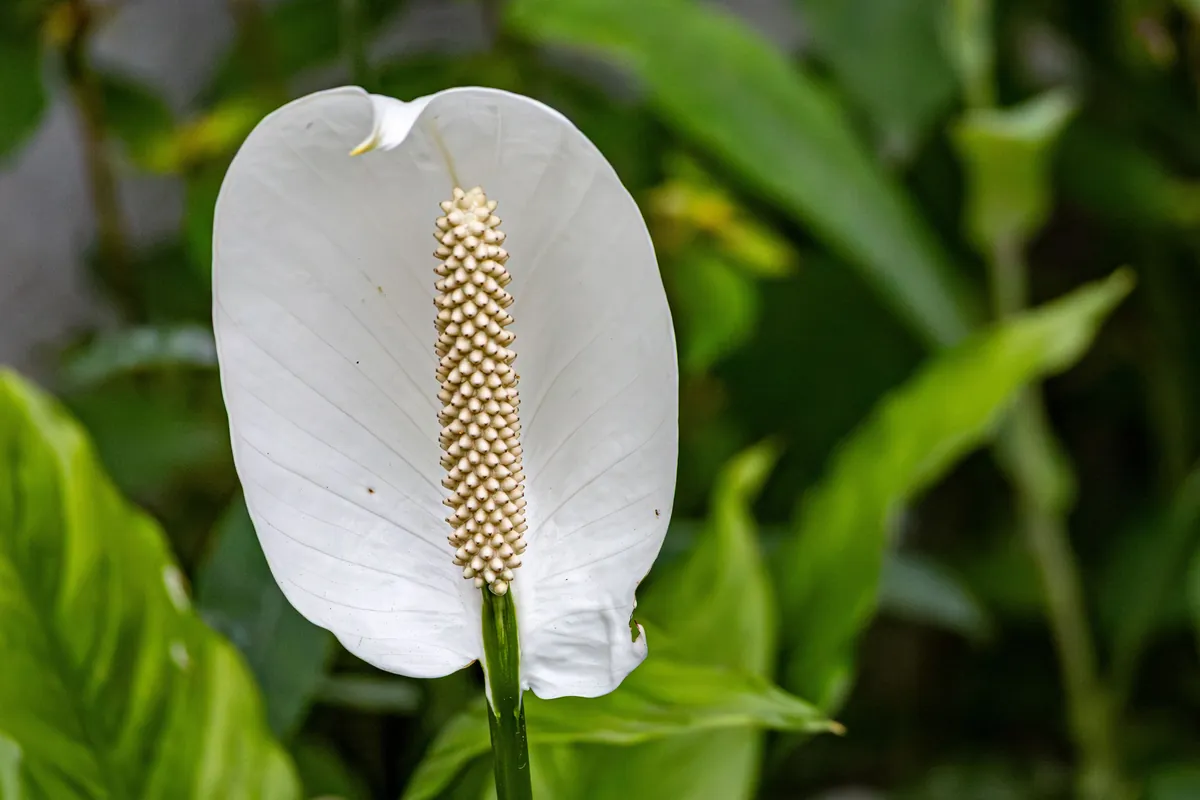
Peace lilies are sold in flower, so a plant that stops blooming at home feels like a failure. It rarely is one. Every item on this list is reversible, and most plants flower again within a single growing season.
Why Is My Peace Lily Not Flowering?
A peace lily blooms when bright light, a mature plant, and steady feeding line up, and it stays stubborn when any one of those is missing. Light is the usual culprit: a plant in deep shade keeps its glossy leaves but has little reason to spend energy on a flower. Age comes next, because a young or freshly divided plant spends its first season building roots and foliage instead of spathes. Fertilizer and pot size matter as well, but they rarely rescue a plant that is sitting in the dark. The order worth working through is light, then age, then fertilizer, then pot size, and finally temperature. Fix the first two and most peace lilies respond on their own, without any forcing, within a few months. The rest of this guide takes each check in turn and explains what to change.
Check the Light Before Anything Else
Peace lilies come from the shaded floor of tropical forests, and that history shows in how they bloom. The Plant Toolbox at NC State Extension notes that these plants flower freely when grown in bright, indirect light, and the Nebraska Extension lists a refusal to flower as one of the first signs that a houseplant is not receiving enough light.
A quick test beats a guess. At midday, hold your hand between the plant and the window. A soft shadow with no hard edges means bright, indirect light, which is the goal. A sharp, dark shadow means direct sun that will scorch the leaves, and no shadow at all usually means the plant sits in deep shade and will not bloom. An east window, or a south or west window behind a sheer curtain, lands in the right range.
Is Your Plant Old Enough to Bloom?
Maturity is the second thing to rule out. A peace lily sold in flower was pushed into bloom by a commercial grower with ideal greenhouse conditions, and a young plant at home usually puts energy into its root ball before it spends any on flowers. A division lifted from a large clump can take a full season before it blooms again.
There is a simple signal that the plant is ready. If new leaves are opening regularly through spring and summer, it has energy to spare, and flowers normally follow once the light improves. A plant that has not produced a new leaf in months is not withholding flowers, it is stalled, and the causes overlap closely with the ones in our guide to why a houseplant stops growing.
How Much Phosphorus Does a Peace Lily Need?
Fertilizer is where many owners push in the wrong direction. Nitrogen drives leafy growth while phosphorus is the nutrient tied to flowering, so a steady diet of high-nitrogen feed can produce a lush plant with no blooms at all. The UConn Home and Garden Education Center puts it plainly: foliage plants respond to nitrogen-heavy fertilizer, while flowering plants do better with a higher phosphorus analysis.
Switch to a balanced feed, or one with a higher middle number, and dilute it to about one quarter of the label strength. Feed only while the plant is actively growing. Overfeeding does not force flowers, it burns leaf tips and builds salts in the soil, and the remedy is to flush the pot with plain water and pause feeding for a month.
Should You Repot a Peace Lily to Make It Bloom?
Usually not, and moving to a much bigger pot can set flowering back. NC State Extension advises keeping peace lilies somewhat pot-bound and repotting only when the plant truly needs it, in February or March. A plant with room to spare tends to grow roots and leaves instead of flowers, and an oversized pot holds water long enough to risk root rot.
Repot when roots circle the surface or push through the drainage holes, and step up just one size. Keep the crown at the same level it sat at before, and water lightly for the first week. The full method is in our guide to repotting a houseplant.
What Temperature and Day Length Trigger Flowering?
Peace lilies respond to the seasons even indoors. The University of Florida IFAS extension describes the natural trigger: the plants set flower buds in response to shorter days, longer nights, and cooler temperatures, which is why a plant that ignored the whole summer can surprise you in autumn.
Keep the plant between about 20 and 29°C (68 to 85°F) and away from cold glass and air-conditioning vents. A chill slows growth and can stop buds from forming, and temperatures below roughly 4°C (40°F) damage the leaves. A peace lily parked against a drafty window in winter may look perfectly fine and still refuse to bloom.
What to Expect Once Buds Appear
A new bud opens as the white spathe most people think of as the flower, with a pale spike in the middle. NC State Extension notes that the spathe shifts to light green after about ten days and then stays attractive for at least another month, so a single bloom is worth keeping. Cut the stem at the base once it browns, and carry on with normal watering. The rest of the routine, from watering to leaf care, sits in the complete peace lily care guide.
What Does Not Bring Flowers Back
- More water. Soggy soil suffocates roots and pushes the plant toward decline rather than bloom.
- A much larger pot. Extra soil stays wet and delays flowering.
- A stronger dose of fertilizer. It burns tips instead of forcing buds.
- Direct sun on a bare south or west sill, which scorches leaves in a single afternoon.
- Leaving the plant in the same dark corner and waiting for a different result.
Work down the list in order: bright indirect light, a plant old enough to flower, a phosphorus-friendly feed, a snug pot, and a spot away from cold drafts. Peace lilies bloom on their own schedule, and one good growing season is usually all they need to start again.


