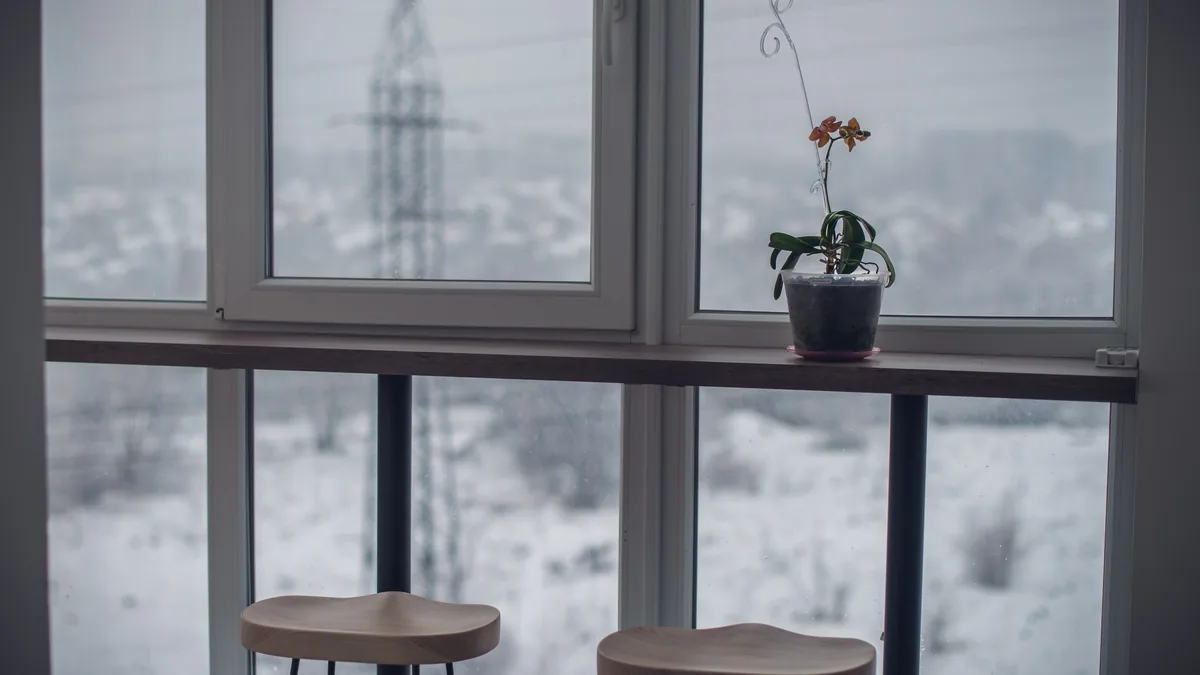
Yes, a houseplant can live beside a cold window, but only while two conditions hold. Its leaves must stay off the glass, and the air around the pot must stay above the plant’s cold limit, which for most tropical houseplants is about 50°F. Glass loses heat to the outdoors faster than any other surface in a room, so the pane and the few inches of air in front of it run colder than the wall behind you. Extension guidance puts hard numbers on the risk. Many tropical plants take damage below 50°F, and a wide group begins to struggle below 55°F. Once indoor nights drop toward 50°F, the danger stops being the weather and becomes a bad indoor placement. This guide covers the temperatures that matter, how to measure the cold at your own plants, and the fixes that actually work.
How Cold Is Too Cold for a Houseplant?
Cold limits differ by how tropical the plant is, but three ranges cover almost every houseplant.
- Below 55°F (13°C). A broad group of tropical species begins to suffer at this level. NC State Extension notes that some species hold out to 45°F, so 55°F is a caution line rather than a universal floor.
- Below 50°F (10°C). Many tropical plants begin to incur damage, which extension sources call chilling injury.
- Mid-to-lower 40s°F. Many indoor plants show visible damage here, and nearly all die if they freeze, which happens below 32°F (0°C). Iowa State University Extension reports that most houseplants are brought inside once nighttime temperatures settle near 50°F.
Chilling injury is not freezing. Ice forms only below 32°F, but the tissue of tropical plants is already stressed in the 40s and low 50s, and the visible damage can take weeks to appear. Cool air also slows roots and leaves, so a chilled plant takes up less water and barely grows. Most houseplants are happiest between 65°F and 75°F by day, a little cooler at night.
The Coldest Spots in a Typical Home
Cold does not spread evenly through a room. With the thermostat fixed, it collects in predictable places, and these are the ones that most often sit below a tropical plant’s limit.
| Spot | Why It Runs Cold | What To Do |
|---|---|---|
| Glass Surface | Touching glass pulls heat straight out of leaf tissue | Set the pot back so no leaf can reach the pane |
| Windowsill | Air within a few inches of glass runs below room temperature | Move the plant inward, a small stand works |
| Floor Along Exterior Wall | Cold air settles low and hugs the outside wall | Lift pots onto a riser or stand |
| Exterior Doorway | Cold air sweeps across the floor each time the door opens | Keep plants a few feet clear of the door |
| Air Conditioning Vent | A direct blast of cool air chills foliage | Redirect the vent or move the plant |
| Heat Vent Or Radiator | The air is warm but dry, and dry air stresses leaves | Keep plants several feet away |
Run your hand along the glass and the floor at night. The contrast with the room is usually obvious, and it tells you where to move a plant before damage starts. If the chill comes from a gap under an exterior door rather than the glass, that is a separate fix covered in the guide to stopping cold air under a door.
How Do You Find the Cold at Your Own Plants?
You do not have to guess which spot is safe. Two cheap tools settle it in a day.
- Put a minimum-maximum thermometer where the pot sits and leave it for 24 hours. Read the low, not the current reading. That low is the coldest the air at the plant reached overnight.
- Point an infrared thermometer at the glass itself. Test before dawn, when indoor temperatures usually bottom out, and note how far below the room reading the pane falls.
Compare the numbers with the limits above. If the overnight low at the plant stays above about 50°F, a tropical houseplant is usually fine where it is. If it drops into the 40s or lower, the spot is too cold and the plant needs to move inward, gain a barrier, or both. Test on the coldest night you can find. A single frosty night is what injures tissue, and a mild night will tell you nothing.
Why Do Cold-Damaged Leaves Appear Days Later?
The delay makes cold damage easy to misread. NC State Extension says chilling injury can appear quickly or take several weeks, so a plant can look fine for a week and then collapse.
Watch for water-soaked or translucent patches between the veins that later turn dark brown or black, sudden leaf drop, and wilting in soil that is still damp. That last sign is the trap. A chilled plant wilts because cold roots stop taking up water, not because the soil is dry, so adding water on top of a cold, damp pot invites rot. Check the soil with your finger first, and if it is already moist, move the plant somewhere warmer and leave it alone. Leaves that are browned or mushy will not recover, but a plant that only dropped some leaves can push new growth from healthy stems once warmth returns.
How Do You Protect a Plant Next to Cold Glass?
Work from free fixes upward, and start with distance.
- Set the pot back from the pane. Even a few inches of air insulates. The goal is simple, no leaf should touch glass.
- Draw a curtain at night. A heavy curtain or thermal blind placed between the plant and the window slows the cold that radiates off the glass after dark.
- Add a barrier for a bad window. A sheet of bubble wrap pressed onto the glass, or an inexpensive window film kit, cuts the chill from a single pane.
- Warm the roots, not the leaves. A seedling heat mat under the pot lifts the root zone a few degrees, which matters because cold soil stalls water uptake.
- Group your plants. Clustered pots hold a slightly warmer pocket of air than an isolated one.
- Water less and keep foliage dry. A chilled plant uses less water, and wet leaves in cold air invite problems.
Illinois Extension adds one rule that costs nothing. Avoid placing houseplants where they sit in a draft or too close to a heat vent, because both stress leaves that are already coping with cold glass. Dry winter air is a second front, which is why raising humidity around houseplants does as much for them as blocking the chill.
Which Houseplants Tolerate a Cold Spot Best?
Tolerance varies widely, and matching the plant to the spot saves you a rescue later.
- Hardy picks. Snake plant, ZZ plant, cast iron plant, ivy, and most cacti and succulents handle a cool bright window better than most.
- Middle of the pack. Pothos, philodendron, spider plant, and monstera manage a mild chill as long as they are not touching the glass.
- Sensitive picks. Calathea, peace lily, ferns, orchids, and African violets show chilling injury early and need the warmest bright spot you have.
A cool spot under bright light usually beats a warm dark corner, so if you must choose, protect the sensitive plants first and let the hardy ones hold the colder windows. Move any plant that shows patches, sudden leaf drop, or wilting in damp soil. If one room is always the coldest in the house, it is worth finding out why one room runs colder than the rest before you blame the plants.


