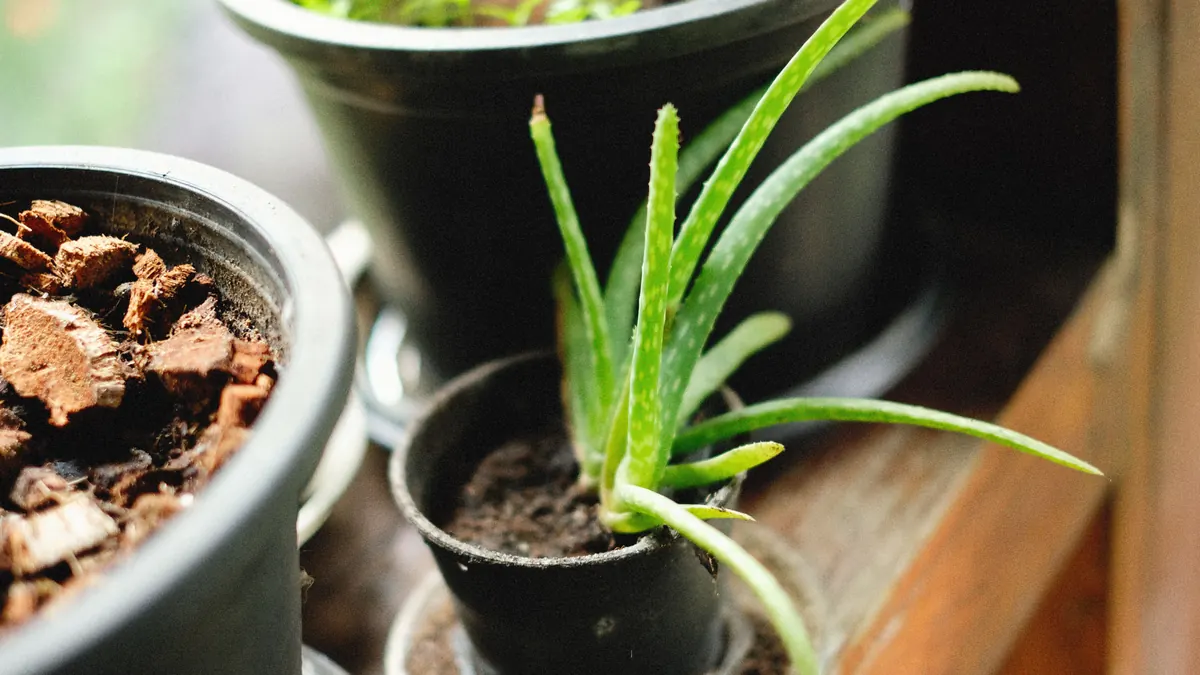
Aloe vera has a reputation as the plant that refuses to die, and that reputation is exactly what kills it. Someone buys a small pot, waters it along with the rest of the houseplants, and three months later the base has gone soft and the leaves are lying flat on the soil. Nothing dramatic happened. The plant simply spent weeks sitting in wet compost when its roots expected to dry out.
Indoors, aloe is easy, but only on its own terms: strong light, gritty soil, and a watering rhythm built around drying out rather than around the calendar. Get those three things right and the plant grows steadily for years, sends up offsets, and occasionally rewards you with a flower spike.
Give it the brightest spot you own
Aloe is a desert succulent, not a shade plant. In the wild it grows in full sun on dry ground, and a dim corner is the fastest route to a pale, stretched plant with leaves that flop outward. A south- or west-facing window is ideal, and a few hours of direct sun do no harm to a plant that has been acclimated to it.
The Royal Horticultural Society advises full light with good ventilation for aloes grown in containers, and notes that they dislike humid atmospheres and will not grow well in shade. If you move a plant from a shaded spot to a sunny window, do it over two or three weeks so the leaves do not scorch.
Plant it in gritty, fast-draining mix
Regular potting soil holds water like a sponge, which is the opposite of what a succulent wants. Use a cactus and succulent mix, or blend standard mix with perlite, coarse sand, or horticultural grit at roughly equal parts. The mix should feel loose and fall apart in your hand rather than clump together.
The pot matters just as much. NC State Extension recommends a container with several drainage holes, with clay being the best choice, and letting the soil dry completely between waterings. Terracotta is a good fit because its porous walls pull excess moisture out of the mix. Skip decorative cachepots that hold water against the base of the pot.
Water deeply, then let the soil dry out completely
This is where almost every aloe dies. The plant stores water in its thick leaves, so it can go a long time without a drink and cannot tolerate a permanently damp root zone. Two habits work well together:
- Water thoroughly until moisture runs out of the drainage holes, then empty the saucer so the pot never stands in water.
- Wait until the potting mix is dry all the way through before watering again, not just dry on the surface.
For a typical indoor aloe, that means roughly every two to three weeks in summer and every four to six weeks in winter. Your home’s humidity, pot size, and light level will shift those numbers, so check the soil before each watering rather than trusting a reminder on your phone. A plant that has been overwatered first shows translucent, yellowing leaves low on the rosette that feel soft and jelly-like. That is the same signal succulents give when their soil stays wet, and it is worth reading the guide to succulent leaves falling off before you water again.
Underwatering looks different and is far less dangerous. The leaves thin out, curl inward at the edges, and may take on a reddish or brown tint in strong sun. A single deep watering reverses it within a few days.
Deal with offsets before they crowd the pot
Aloe spreads by offsets, the small pups that appear around the base of the parent plant. Left alone, a healthy plant will fill its pot and start pushing against the walls. Spring is the easiest time to divide them: unpot the whole clump, ease the pups away with their own roots, and pot each one in gritty mix at the same depth it was growing. The steps are the same as any other division job, and the general routine in this guide to repotting a houseplant applies.
Repot the main plant every two to three years, or sooner if roots are circling the drainage holes. Move up one pot size at a time. A large pot full of wet soil around a small root ball is a rot risk, not a favor.
Winter is the season that catches people out
Indoor aloe fails most often between November and March. Light drops, the room cools, the plant stops growing, and the soil takes much longer to dry. Watering at summer frequency in December is a reliable way to lose the plant. Cut watering right back, keep the pot above roughly 50 degrees Fahrenheit, and move it off cold windowsills and away from draughty doors. Aloes cannot withstand freezing temperatures, so a cold pane of glass is a real hazard. Feeding should stop entirely until you see new growth in spring.
Reading the leaves: symptom check
| What you see | Most likely cause | What to do |
|---|---|---|
| Soft, brown, mushy base | Rot from wet soil | Unpot, cut away soft tissue, repot in gritty mix, hold water |
| Yellow or translucent lower leaves | Overwatering | Let the mix dry completely, empty the saucer |
| Thin, curled, brown-tipped leaves | Underwatering | Water deeply and let the pot drain |
| Pale, stretched, floppy growth | Too little light | Move to a brighter window, acclimatise slowly |
| Sticky white specks in leaf joints | Mealybugs or aphids | Wipe with a cotton bud dipped in rubbing alcohol |
If the base has rotted above the soil line, the plant is usually past saving, and the symptoms overlap closely with the watering problems that destroy many other houseplants. The fix for root rot covers how far to cut back and what recovery looks like.
Keep it away from pets
Aloe is a good houseplant, but not a pet-safe one. The ASPCA lists aloe as toxic to dogs, cats, and horses, with saponins and anthraquinones as the toxic principles and vomiting, lethargy, and diarrhea as the usual signs if an animal chews the leaves. Put the pot on a high shelf or in a room your pets cannot reach. In people, aloe is generally used topically: the clear gel inside the leaf is applied to minor burns and skin irritation, while the yellow latex just under the skin can cause contact dermatitis in sensitive people. Ingesting the leaves is not a sensible home remedy.
The short version
Bright window, gritty mix, a pot with holes, and water only when the soil is dry all the way down. Aloe rewards neglect far better than attention. If you can leave it alone for three weeks and then soak it properly, you are already caring for it correctly.


