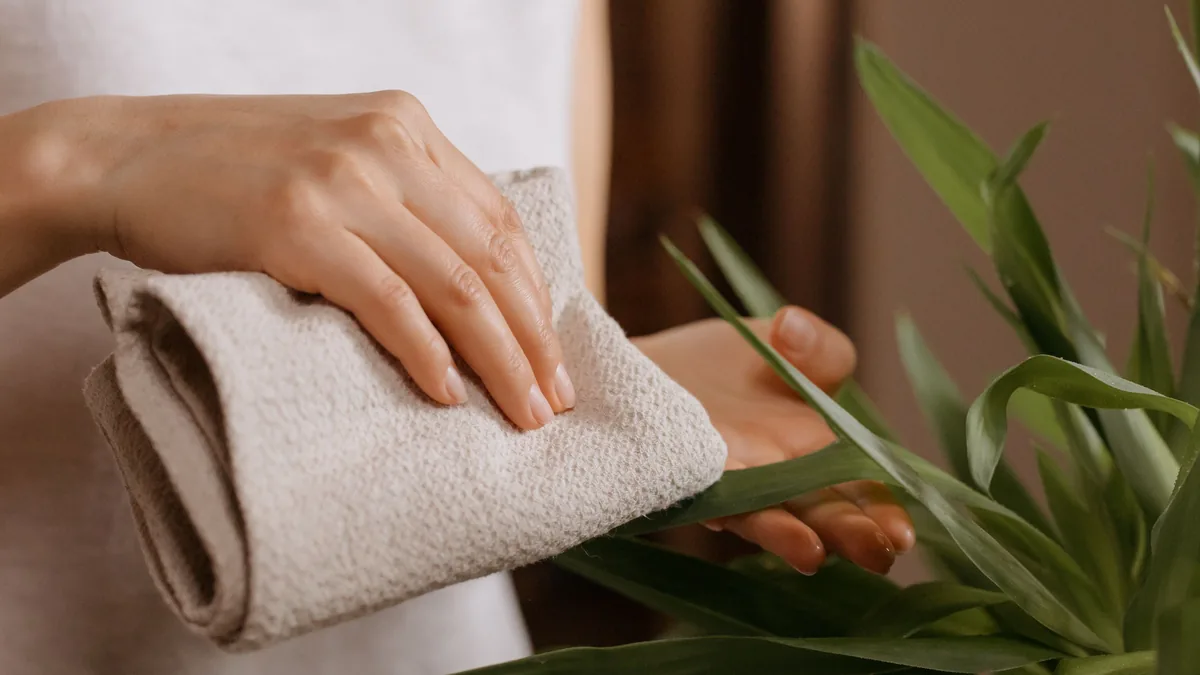
A thin layer of dust on a leaf looks harmless until the plant starts to look tired. Dust blocks the light a leaf needs to make food, and it gives pests a quiet place to settle in. Cleaning houseplant leaves takes a few minutes per plant, but the method decides whether you help the plant or damage it. If you are still building a routine, start with the basics of houseplant care before adding jobs like leaf cleaning to the schedule.
Why a dusty leaf is more than a cosmetic problem
Leaves breathe and transpire, and dust gets in the way of both. A Penn State Master Gardener describes fiddle leaf figs as leaves that “breathe and transpire and cannot do that with a layer of dust,” and recommends wiping them top and bottom with a damp cloth every few months.
The second reason matters more over time. Spider mites, scale, and mealybugs settle first on dry, dusty foliage nobody touches. Cleaning puts every leaf in your hands, which makes it the cheapest pest inspection you will ever run.
First, identify what is on the leaf
The right method depends on what the film actually is. If a leaf feels tacky rather than dusty, a wipe will not solve it: deal with the insects first, then clean off the residue they leave.
| What you see | What it is | What to do |
|---|---|---|
| Grey film that wipes off cleanly | Household dust | Damp cloth or rinse |
| Chalky white rings that return | Mineral residue from tap water | Switch to filtered or rainwater |
| Sticky, shiny film with small specks | Honeydew from sap-sucking pests | Treat the pests, then clean |
| Dry brown patches or crispy edges | Damage, not dirt | Fix the cause, cleaning will not help |
Match the method to the leaf type
| Leaf type | Examples | Best method | Avoid |
|---|---|---|---|
| Large, smooth, leathery | Monstera, rubber plant, fiddle leaf fig | Soft damp cloth, one leaf at a time, top and underside | Pulling the leaf by the tip, polished sprays |
| Small, thin, many leaves | Pothos, philodendron, hoya | Lukewarm rinse, then let the pot drain fully | Leaf by leaf wiping with a dry cloth |
| Fuzzy or velvety | African violet, begonia | Soft brush, base to tip, dry | Water and wet cloths |
| Succulents and cacti | Aloe, jade, echeveria | Soft brush or a puff of air | Soaking, water in the rosette |
| Very fine foliage | Boston fern, maidenhair fern | Gentle lukewarm rinse, keep out of sun until dry | Rubbing, which crushes the leaflets |
Wiping a large-leaved plant, step by step
- Dust the leaf with a dry soft cloth first, so most of the grey film comes off without smearing.
- Support the leaf from underneath with your free hand so the petiole is not carrying the weight.
- Wipe the top surface with a damp cloth, working from the midrib out to the edge.
- Turn the leaf over and wipe the underside, where dust and mites collect.
- Rinse the cloth when it looks grey, then finish with a clean section.
- Let the plant dry out of direct sun, with no water pooled in the crown or between leaves.
The underside is the step people skip. A plant that looks clean from above can still be feeding a mite colony.
Rinsing small-leaved plants without soaking the pot
Trailing plants with dozens of small leaves are quicker to rinse than to wipe. Use a sink or shower with lukewarm water, tilt the pot so most of the water runs off the foliage, then let it drain fully and empty the saucer. Constantly damp surface soil is what brings fungus gnats, so read about fungus gnats in houseplants if they appear. A late evening rinse is the worst option, because leaves that stay wet overnight are more likely to develop spots.
Fuzzy and velvety leaves need a brush, not a cloth
Water and hairy leaves do not mix. Droplets sit between the hairs instead of rolling off, and the leaf can end up with brown, papery patches. Use a soft makeup brush and sweep from the base of the leaf toward the tip, holding the leaf steady with your other hand. On a plant with a tight crown, like an African violet, keep the brush moving sideways instead of pressing into the centre.
What never goes on a leaf
Leaf shine is the most common mistake. Penn State Extension notes that wiping dust from indoor plant leaves is a good idea, but leaf shine or polish may just clog up the plant’s pores, while a soft, damp cloth works fine. The same warning applies to palms, where leaf-shining products damage the fronds.
Skip household oils, milk, mayonnaise, and dish soap as well. They do not clean better than water, and a film of oil or soap can burn in bright light. If your tap water leaves spots, clean with filtered or rainwater instead, and if a plant already shows crisp edges from long-term tap water use, brown leaf tips is the guide to read next.
How often to clean houseplant leaves
Run a fingertip across a lower leaf once a month. If it comes back grey, the plant is due. In most homes that means a clean every three to six weeks, and plants near a street-facing window or a kitchen need it more often. Morning is best, because the leaves are dry again long before evening.
Cleaning time is pest patrol time
Take ten extra seconds per pot. Check the undersides of new leaves, the joints where leaves meet the stem, and the rim of the pot. Fine webbing, sticky residue, small brown bumps, or white cottony patches all point to pests that are far easier to handle now than after they spread. Penn State Extension advises inspecting palms regularly for spider mites and mealybugs and notes that a wipe with a damp cloth or a gentle spray of water helps remove them, alongside keeping fronds away from low humidity and leaf-shining products. New plants should stay in a separate room for their first couple of weeks with you.
Sources
- Penn State Extension, Master Gardener program, Fiddle Leaf Fig (Ficus lyrata)
- Penn State Extension, To Buy or Not to Buy: The Gear Your Houseplants Really Need
- Penn State Extension, Palms as Houseplants


