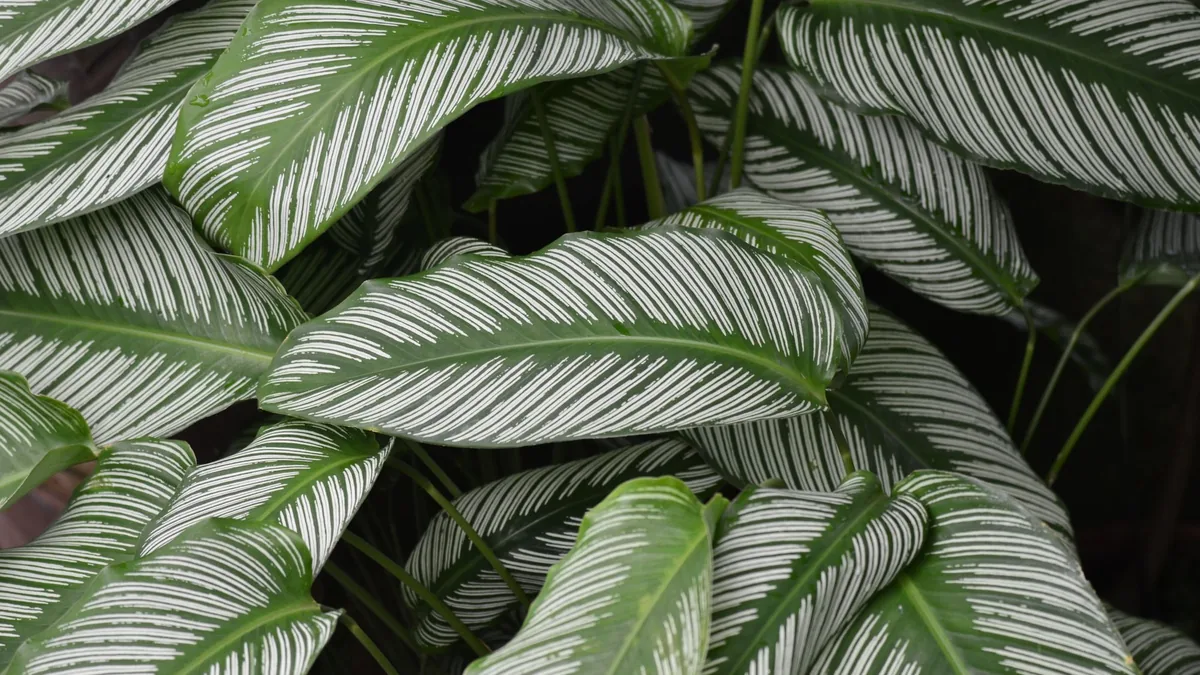
Calathea leaves look painted: crisp stripes and feathered edges that shift from dark green to silver as the light moves. The catch is that these tropical plants expect a slice of rainforest in your living room. They will not tolerate neglect the way a snake plant does, but they are not genuinely difficult either. Master water quality, light, and humidity, and a calathea becomes one of the most rewarding foliage plants you can grow.
Why Calathea Acts Like a Prayer Plant
Native to the shaded forest floors of Central and South America, calatheas grow under a canopy that filters sunlight and keeps the air humid. They belong to the prayer plant family, and the NC State Extension profile explains why they earned the name: each night the leaves fold upward like hands in prayer, a daily movement called nyctinasty.
Reproduce those forest conditions and the plant rewards you with steady new leaves; miss one and the leaves complain by curling or browning at the edges.
Light: Bright but Filtered
Calatheas want the same light a fern wants: bright, indirect light for most of the day. A spot a meter or two back from an east or north window is ideal, as is a west or south window behind a sheer curtain.
Direct sun burns the thin leaves, leaving pale scorched patches that never heal. Low light slows growth and washes out the patterns. If the leaves turn uniformly dark, move the plant closer to the window and rotate the pot a quarter turn each week.
Watering: Soft Water, Even Moisture
The goal is soil that is evenly moist, not soggy: water when the top 2 to 3 centimeters feel dry, then water thoroughly until it runs from the drainage holes. Let the pot drain completely and empty the saucer so roots never sit in water. Water less often in winter, when growth slows.
Calatheas dislike bone-dry and soggy soil alike, and they are among the first houseplants to complain about tap water. The chlorine and fluoride in municipal water collect at the leaf edges and turn them brown, which is why experienced growers use only filtered, distilled, or rainwater. If tap water is your only option, let it sit overnight so the chlorine dissipates, though this does not remove fluoride. The same water issue causes brown leaf tips on many other houseplants, so solving it once helps your whole collection.
Humidity: The Secret to Clean Leaves
Calatheas sit at the top of the humidity-loving list. Heated and air-conditioned rooms are far drier than the tropical air these plants evolved in, and low humidity shows up fast as crispy edges and curling leaves.
A humidifier near the plant is the most effective fix and the easiest to maintain. No appliance? Use a pebble tray: fill a shallow tray with pebbles, add water to just below the pebble tops, and stand the pot on top so the base never touches the water. Grouping several houseplants together also helps, since leaves release moisture into a small shared pocket. Keep the plant away from radiators, forced-air vents, and drafty windows, all of which dry the air around the leaves.
Soil and Repotting
Calatheas need a potting mix that holds moisture without staying soggy. A standard houseplant soil amended with perlite and bark gives roots both water and air, and the peat or coir base holds the even moisture these plants crave. Avoid dense garden soil that packs down after a few waterings.
Repot every year or two when roots crowd the pot, and move up only one pot size, since oversized pots hold wet soil and invite root rot. Spring is the best time, when the plant enters active growth. New to the process? Follow a step-by-step houseplant repotting guide before you start so the root ball stays intact. With the plant out of its pot, this is also the easiest moment to divide it into two.
Temperature and Fertilizer
Average room temperatures suit calatheas perfectly, so if you are comfortable, the plant probably is too. They react badly to cold drafts, sudden temperature swings, and windowsills that turn cold at night in winter, so keep them away from frequently opened doors and direct air-conditioner blast.
Calatheas are not heavy feeders. During spring and summer, use a balanced liquid houseplant fertilizer at half strength every 4 to 6 weeks, and skip fertilizer entirely in winter. Too much fertilizer causes the same salt buildup in the soil that tap water does, which shows up as burned leaf edges.
Common Calathea Problems and What They Mean
Curling leaves. Leaves that roll inward are usually thirsty, either from dry soil or dry air. Check the soil first, then the humidity, and adjust whichever is off. Cold drafts and direct sun also cause curling, so review the plant’s position before changing anything else.
Brown edges and tips. This is the classic water-quality symptom. If your calathea drinks tap water, switch to filtered or distilled water and trim the damaged edges with clean scissors. Damaged tips will not recover, but new leaves come in clean once the conditions are fixed.
Yellow leaves. Yellowing usually means overwatering or poor drainage. Let the soil dry a little more between waterings and confirm the pot has working drainage holes. One or two older lower leaves yellowing is normal aging.
Spider mites. Dry air is the usual trigger, and the fine webbing appears first on the undersides of leaves. Rinse the foliage, raise humidity, and treat with insecticidal soap. Calatheas kept humid rarely see mites, so prevention and treatment are the same.
Calathea Varieties Worth Knowing
The calathea genus covers dozens of species, and most stores sell the same handful. Roseopicta varieties show rosy centers with dark borders, zebrina carries soft green stripes like a zebra, lancifolia grows long wavy leaves with a rattlesnake pattern, and orbifolia fans out broad silver-green rounds. Care is nearly identical across all of them, only the appearance changes, so you can collect several without learning a new routine for each.
The Bottom Line
If you already keep peace lilies happy with soft water and steady moisture, you already understand the calathea mindset, because the two plants want almost identical conditions. Fix the light, soften the water, add humidity, and the painted leaves do the rest.


